The late 19th and early 20th centuries were periods of major change and important historical events throughout the United States, as well as key developments in photography technology. Life could be documented in a way that was never possible before, both physically and economically. Photography allowed for more precise archiving than either lithography or engraving. Roger Fenton and Philip Henry Delamotte were among the first photographers to demonstrate the immense potential photography carried for chronicling important events with their images of the Crimean War and the construction of the Crystal Palace in London for the Great Exhibition of 1851.
Daguerreotypes were introduced in 1839 as the first complete practical photographic process, and remained the most common commercial process until the late 1850s, when the collodion process took over in popularity. This new process produced glass negatives which could be replicated multiple times, unlike the daguerreotype which resulted in a single, unique image. It was also relatively inexpensive compared to daguerreotypes, as the daguerreotype process required expensive polishing equipment and costly silver-plated copper for producing the images. Often printed on albumen paper, the collodion print took two forms, wet and dry, the former which necessitated a darkroom and was more popular with portrait photographers, the latter which required much longer exposure time and therefore was more often limited to landscape photography. Ambrotypes and tintypes are examples of photographs produced via the collodion process.
During the 1880s, gelatin dry plates largely replaced the collodion process. Utilizing glass plates with a dry emulsion of silver suspended in gelatin was more convenient and could also make more sensitive images. The first dry plate factory, the Eastman Film and Dry Plate Company, was established in 1879, a reflection of the popularity of the process. In 1884 Eastman developed dry gel on paper, or film, replacing the photographic plate and with it the necessity of carting around boxes of glass plates and chemicals. And in July 1888 Eastman’s first Kodak camera was put on the market, allowing anyone to take a photograph and let someone else do the processing. Photography went even more mass-market in 1901 with the introduction of the Kodak Brownie camera.
F.A. Bernett currently has for sale several collections of interesting and important early American photography which correspond to and reflect these important changes and developments in the photographic process and the increasing commercial availability of photography equipment.


Collection of 19 Vintage Cabinet Card Views of the 1889 Johnstown Flood. Group of 19 cabinet cards by a local photographer, R.Y. Nice of Williamsport, Pennsylvania, depicting the aftermath of the famous flood and subsequent damage in the town of Williamsport, including Nice’s studio and other local commercial buildings partially underwater, townspeople navigating the streets in rowboats, birds-eye views, and scenes of destruction and debris, some with captions incised into the negatives. Cabinet cards with mounted albumen prints measuring 4″ x 6 1/4″, numbered 2 through 20 in the lower left corners, some with Nice’s name printed on the mount. Williamsport, Pennsylvania 1889.
The Johnstown Flood was the worst flood to hit the United States in the 19th century, causing the deaths of 2,209 people and the destruction of 1,600 homes. It was the largest loss of civilian life the United States had seen up to that point. The flood was one of the first major disaster relief efforts to be handled by the newly-founded American Red Cross, under the leadership of Clara Barton. (48214)


Mather’s Historical Oil Region Views of Western Pennsylvania. Part I. Mather’s Historical Photographs. Mather, John A. 14 leaves, 2 pages of text, 1 engraving, and 11 original gelatin linen-backed photographs regarding the drilling of the Drake Well by Col. Edwin L. Drake in 1859, the first oil well ever drilled in the United States, scenes and figures depicted in the photographs include a portrait of Edwin Drake, Drake at the well, oil traders, and the surrounding areas of “Oil Creek” including Foster Farm, Funkville, John Wait Farm, and John Benninghoff Run. Spine slightly shaken. Oblong 4to. Black cloth boards. Titusville, Pennsylvania (John A. Mather) 1895. Ink inscription on front endpaper “Miss Margaret Bond from Mrs E. Mather, Christmas 1905”
Edwin Drake was hired by the Seneca Oil Company in 1858 to investigate suspected oil deposits in the Titusville region of Pennsylvania. Prior to this, petroleum oil was known of, but there was not yet a market for it. Drake began drilling, with pipe and steam, but progress was slow and the Seneca Oil Company had pulled their backing. Using his own money and that of friends, Drake persevered and on the morning of August 28th, after months of drilling at the rate of approximately three feet per day, Drake’s driller looked into the hole and saw crude oil. The Drake Well prompted the first big investments in the petroleum industry and additional drilling in the area that became known as Oil Creek, ushering in the Pennsylvania oil rush.
John A. Mather was the pioneer photographer of Pennsylvania’s Oil Region. Hearing of the exploding activity in the Oil Creek Valley, Mather and his wife moved to Titusville in 1860 where he began working with a series of makeshift traveling darkrooms/studios. He transported his equipment through the oil fields by ox-pulled wagon or flatboat, and sold his photographs to a local audience. During his years photographing the Pennsylvania oil rush, he amassed a collection of over 20,000 glass plate negatives. However, due to damage from floods and fires, only 5,000 have survived to this day, preserved in the collections of the Drake Well Museum. Scarce; as of February 2017, WorldCat locates only three holdings in North America. (48619)


Photograph Album Documenting the Aftermath of the 1906 San Francisco Earthquake. Collection of approximately 99 original black-and-white photographs showing the destruction caused by the earthquake and resulting fires, and the subsequent clean-up and reconstruction efforts, most pages with hand-written captions, with specific sites depicted including the Ferry Building, Market Street, burning buildings, refugee camps, City Hall, the Hearst Building, the Palace Hotel, gutted churches, rubble, and relocated shops, some photos with signature for R.J. Waters & Co. and caption within the plate, label affixed to inside front cover for Waters Company, San Francisco. Photos overall in very good condition. Various sizes to 8″ x 10″. Photos affixed to album leaves with photo corners and small dots of glue, many photos already loose, all pages detached from album. Oblong 4to. Cloth album. San Francisco (R.J. Waters & Co.) circa 1906.
The 1906 earthquake struck the coast of Northern California at 5:12 am on April 18th, with a magnitude of 7.8. Over 80% of the city of San Francisco was destroyed as a result of the quake and the subsequent fires, with 30 different fires destroying 25,000 buildings across 490 city blocks within three days. An estimated 3,000 people died. Initially only 375 deaths were reported, due in part to hundreds of ignored and unreported fatalities in Chinatown. To this day, it is still the deadliest natural disaster in California’s history. Up to 300,000 people were also left homeless out of a total population of 410,000, with some refugee camps remaining open for over two years. (48636)


Collection of Original Photographs of Alaska. Album comprising approximately 500 original photographs of various formats, the majority taken in and around the copper mining town of Kennecott, Alaska, during its heyday in the 1920s, including the Bonanza, Jumbo, and Erie mines, nearby towns such as Cordova, McCarthy, and Ruby, hunting and skiing trips, dogsledding, Eskimos, railroads, the Childs, Columbia, and Kennicott glaciers, and steamships, with 21 most likely unpublished photographs captioned “Mt Logan Alaska 1925 – June / Guided by Andy Taylor, Famous Alaskan Guide” being of particular interest, depicting the first successful expedition to the summit of Mt. Logan in the Yukon Territory, Canada’s highest peak, with photographs showing the team setting up camp, loading their sleds, and trekking, together with several pieces of ephemera including a telegram, a Pacific Line steamship catalog, and a newspaper clipping. Original album disbound and trimmed to fit, with original album pages and hand-written captions intact, some original photo corners replaced. Small folio. Housed in two contemporary albums. N.p. (Kennecott, Alaska), circa 1920s.
A geologist first approached the Alpine Club of Canada in 1922 with the idea of sending a team to summit Mt. Logan. A team of Canadian, British, and American climbers was assembled, and their trip was delayed from 1924 to 1925 due to delays in funding and preparation. They began their trip in early May, journeying from the Pacific coast by train, and then traversed the remaining 120 miles on foot to the Logan Glacier, where they established base camp. On June 23, 1925, the team of Albert H. MacCarthy, H.F. Lambart, Allen Carpé, W.W. Foster, Norman H. Read, and Andy Taylor became the first people to stand atop the summit of Mt. Logan.
The Kennecott Mines were discovered around the turn of the century, and confirmed as the richest known concentration of copper in the world at the time in 1901. Five different mines turned out incredible amounts of copper, at their peak generating $32.4 million worth of ore in a single year. The highest grades of ore were largely depleted by the early 1930s, with the mines closing gradually. The last train left Kennecott on November 10, 1938, leaving it a ghost town. In the 1980’s, the town became a tourist destination, and was designated a National Historic Landmark in 1986. (48621)


A Picture Journey to Farms in Idaho, Washington, Oregon. Spokane, Washington.- Pacific Northwest Farm Trio. 62 pp. promotional photo album containing 72 mounted silver gelatin photographs of farms, orchards, crops, and related agricultural activities from farms throughout the Pacific Northwest, each page with a typed descriptive caption below the photo, some of the photographs signed within the negative, known photographers include Asahel Curtis, Bradbury Williams, and Arthur Prentiss. One of the photographs coming loose, several pages with small tears to margins, some minor warping and toning of pages. Oblong 8vo. Leather. Some bowing to covers, rubbing and small losses along extremities, small splits at spine. Spokane, Washington (Pacific Northwest Farm Trio General Offices) n.d. (circa 1930).
The Pacific Northwest Farm Trio comprised the publications The Washington Farmer, The Idaho Farmer, and The Oregon Farmer. The views depicted in this album include apple farms in Washington, the Hood River Valley, the Willamette Valley, the Yakima Valley, tractors and farm machinery, harvesting and packing apples, planting wheat, cows on a dairy farm, sheep, chickens, turkeys, Arrowrock Dam, irrigation, vegetables, strawberry plants, and orchards. Very scarce; as of March 2017, this title is not listed through WorldCat. (48654)
Tagged as:
19th century,
20th century,
History,
photography,
United States
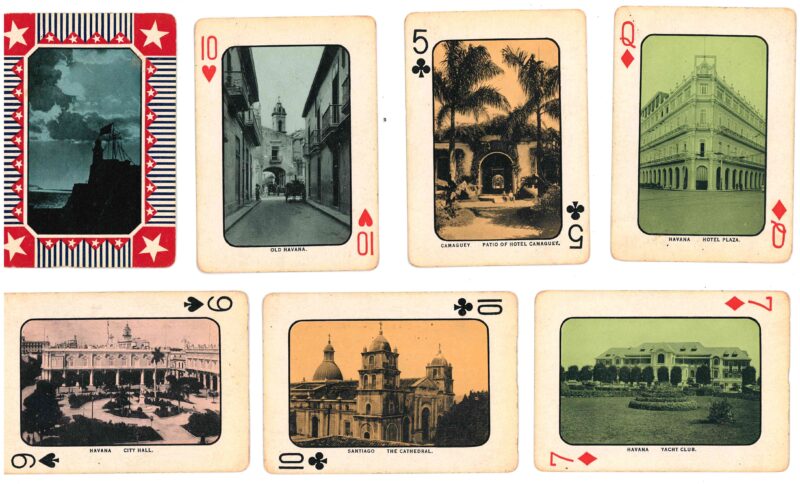
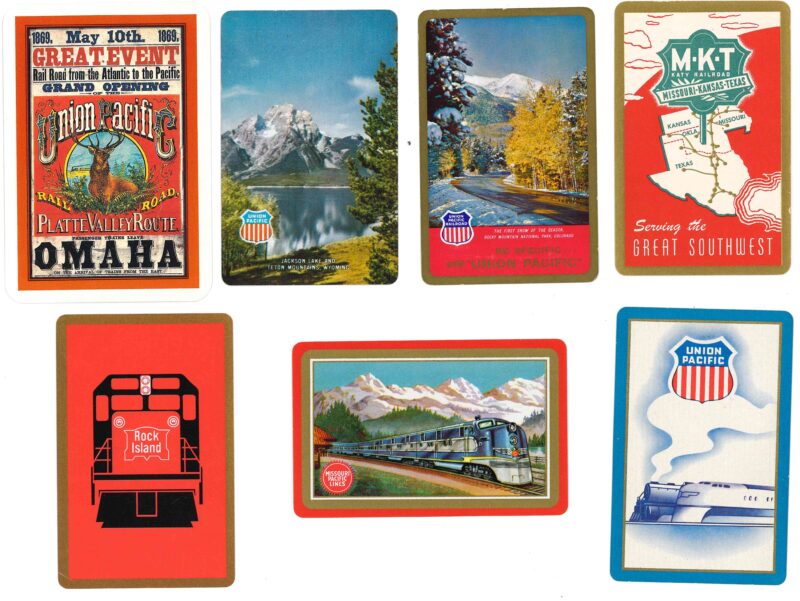 This phenomenal and expansive collection of playing cards serves as an unusual and invaluable resource by which we can trace the history of transportation and the railroad industry, trends in travel and advertising, technological developments, cultural history, and even politics. While playing cards date back to antiquity, card games saw a surge in popularity in Europe during the 17th and 18th centuries. By the early 19th century, games such as poker were played on gambling riverboats on the Mississippi River. Playing cards occupy a unique place in history in that they are able to function as decorative objects, while also being objects of daily use and recreation. Their portable size made them well-suited to travel. Railroads and airlines produced decks of playing cards as complimentary items of entertainment for their passengers to use while aboard and to take with them as souvenirs of their trips.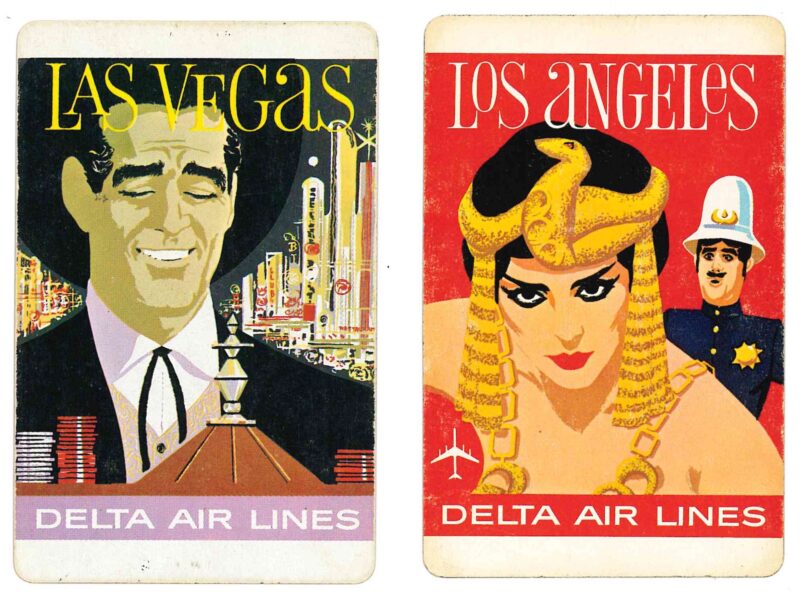
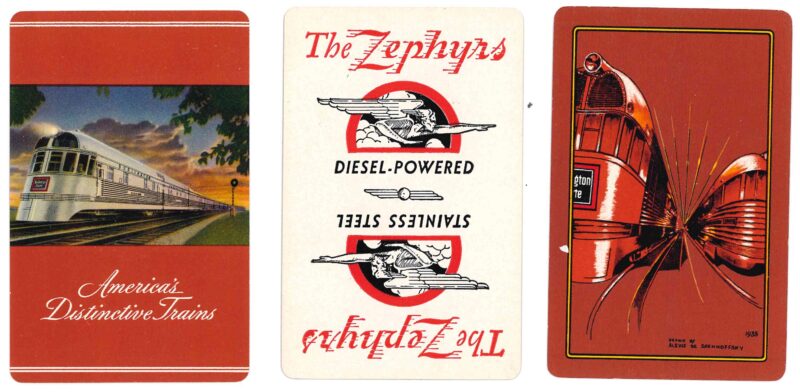
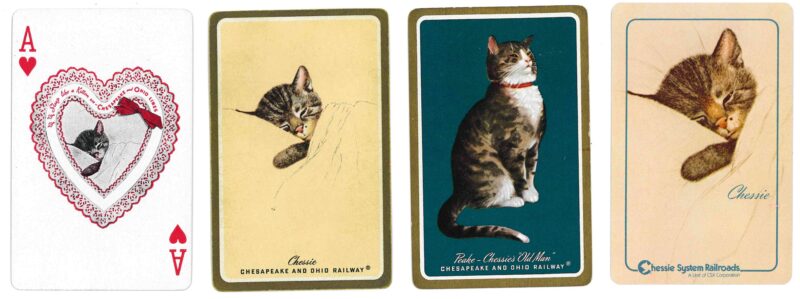
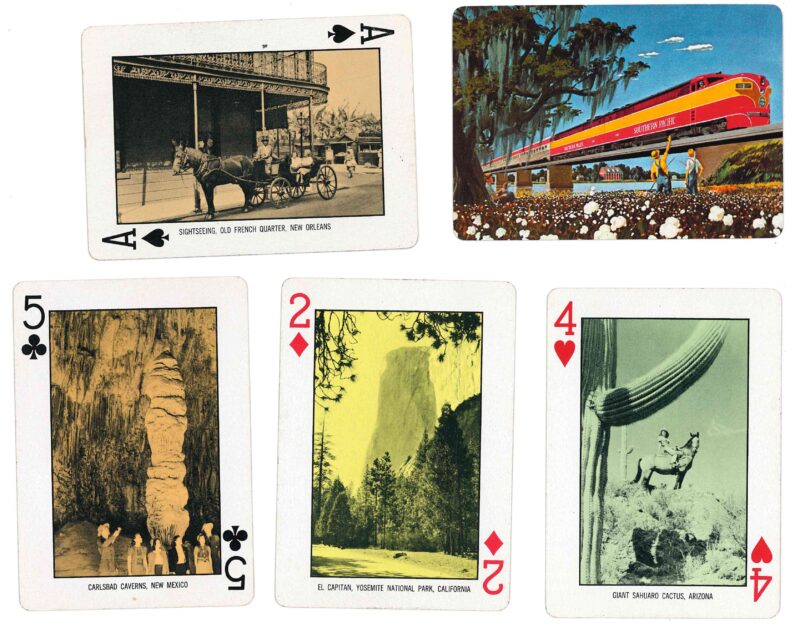
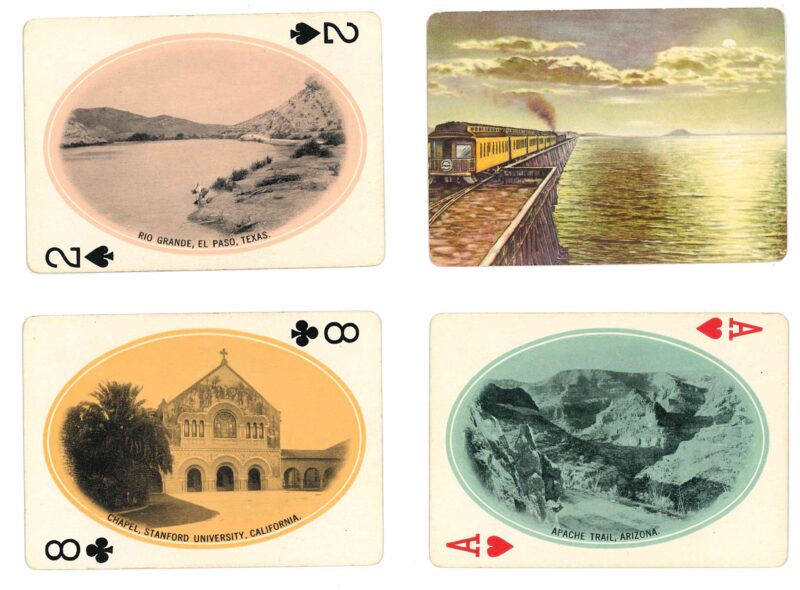
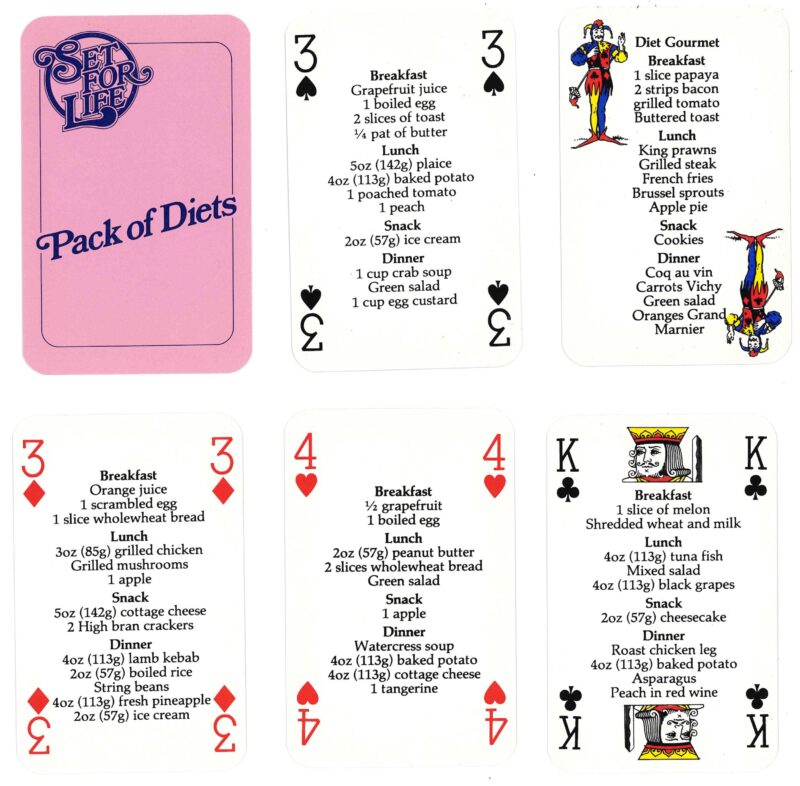 UK Registered Dieticians “Pack of Diets” deck featuring four different diet plans, one per suit, which a different full day’s menu per card
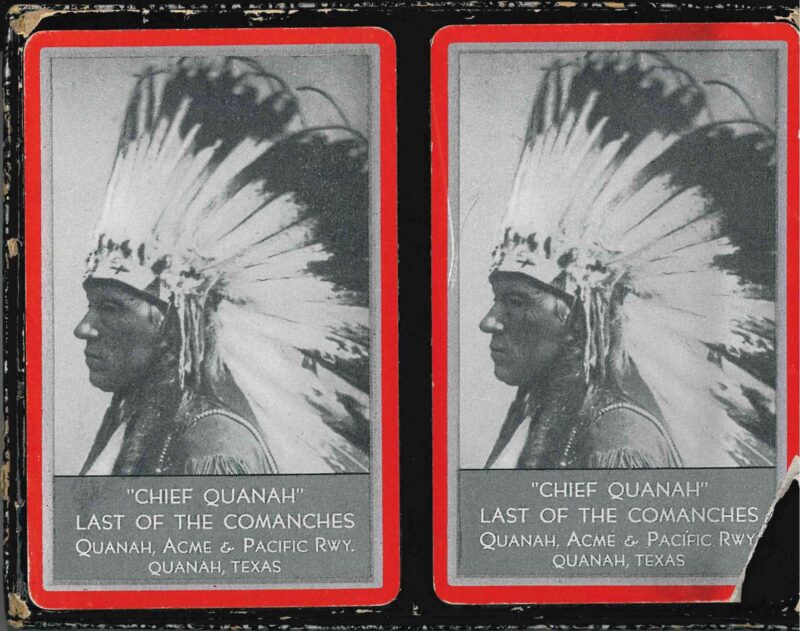 Two railroad double-decks featuring Native American figures, including one with a portrait of Chief Quanah, Last of the Comanches from the Quanah, Acme & Pacific Railway
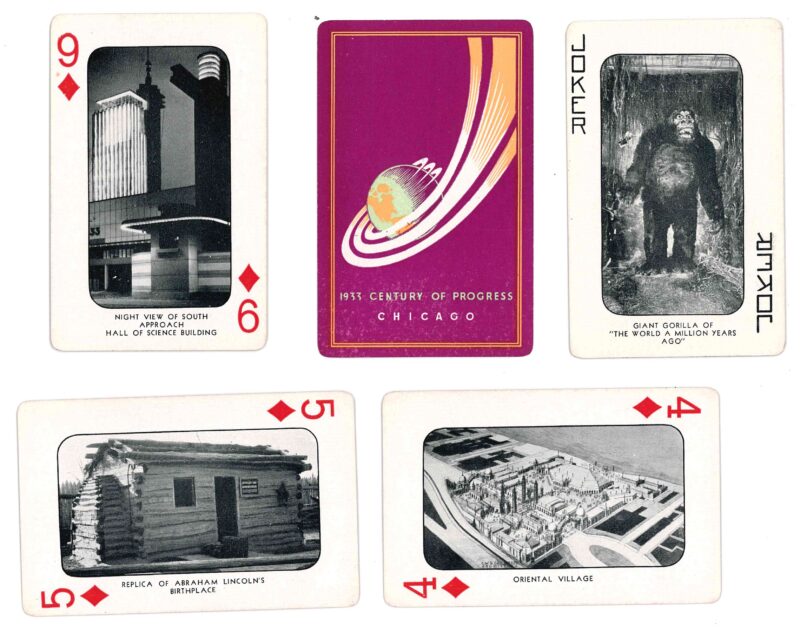 1933 Century of Progress World’s Fair souvenir deck with views of the fair
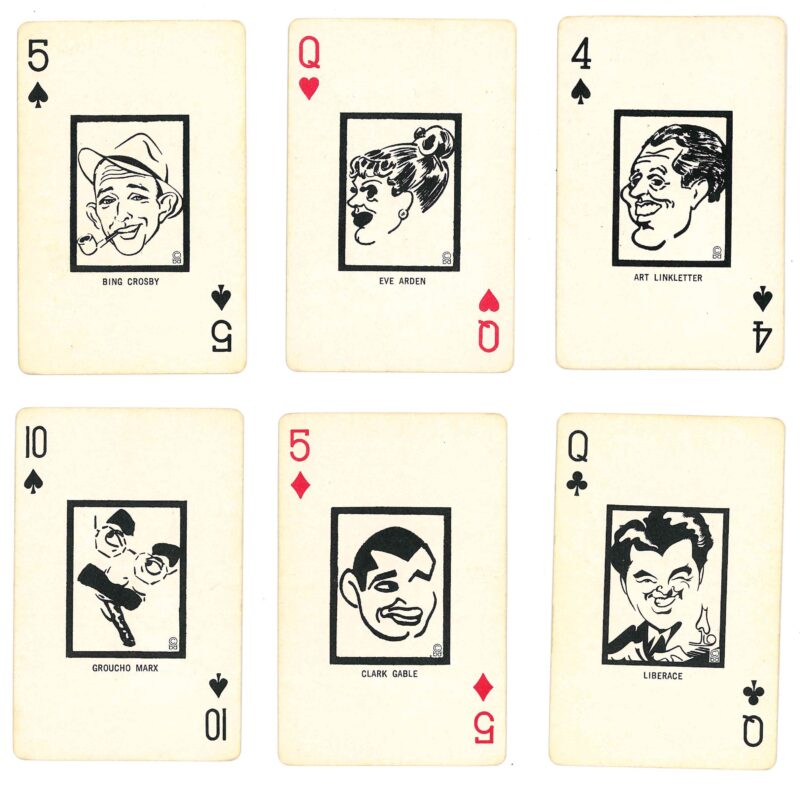 An incomparable historical and cultural resource and a fascinating collection of incredible scope. Collection of over 700 decks of playing cards, primarily American but also with examples from Europe and elsewhere in the world, published from the mid-19th through the early 21st century, most in original boxes and cases, many still sealed in original wrapping, some double decks in larger folding boxes. Varying condition – many excellent, a number of cases with expected wear and tear to cardboard, a handful of decks incomplete. Various places, circa 1845-2015. Price available upon inquiry