From the category archives:

19th-Century

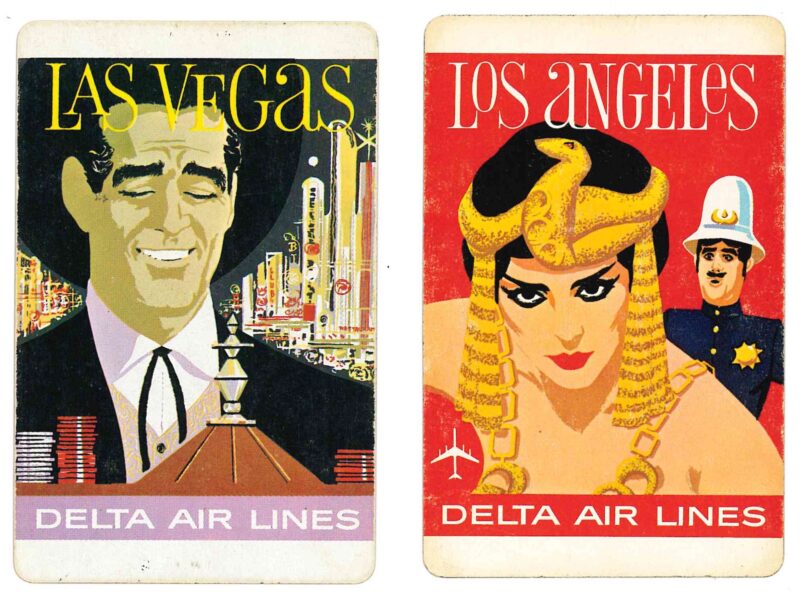
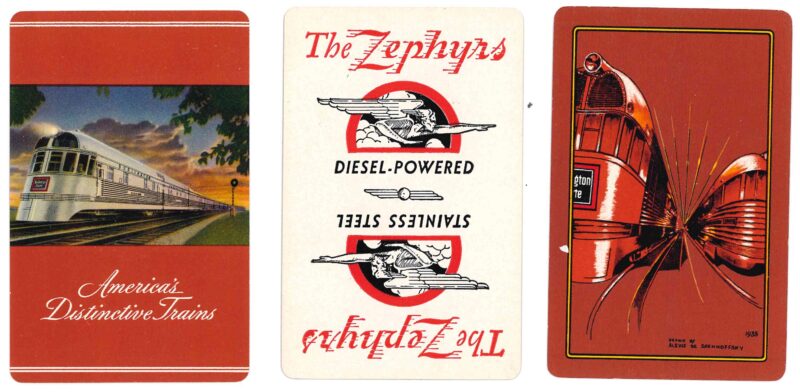
This phenomenal and expansive collection of playing cards serves as an unusual and invaluable resource by which we can trace the history of transportation and the railroad industry, trends in travel and advertising, technological developments, cultural history, and even politics. While playing cards date back to antiquity, card games saw a surge in popularity in Europe during the 17th and 18th centuries. By the early 19th century, games such as poker were played on gambling riverboats on the Mississippi River. Playing cards occupy a unique place in history in that they are able to function as decorative objects, while also being objects of daily use and recreation. Their portable size made them well-suited to travel. Railroads and airlines produced decks of playing cards as complimentary items of entertainment for their passengers to use while aboard and to take with them as souvenirs of their trips.
 

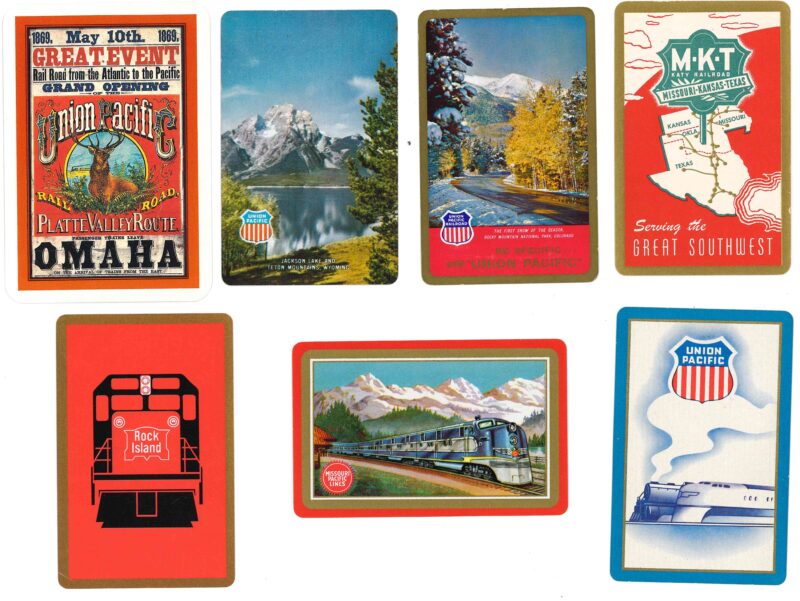
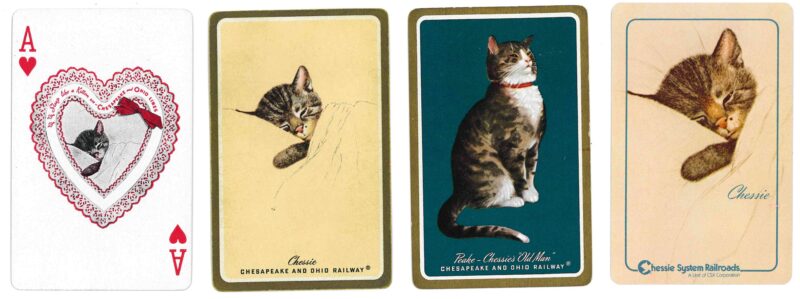
Of the 700 or so decks in the collection, over a third are related to the railroad industry. Over fifty individual railroad lines are represented, both major and minor lines from across North America, including Northern Pacific, Southern Pacific, Union Pacific, Algoma Central, Atlantic Coast Line, Bangor/Aroostook, Burlington Northern, Burlington Vista Dome Zephyr, Southern Railway, Denver and Rio Grande Western, Illinois Central, Chesapeake and Ohio, Canadian Pacific, Kansas City Southern, L&N (Louisville & Nashville), Missouri Pacific, Ontario Northland, Norfolk and Western, Norfolk and Southern, Nickel Rate Road, Pennsylvania Railroad, B&O, Wabash, Soo Line, Santa Fe, Seaboard Coast Line, and others. Many of the decks have pictorial backs showcasing a landscape scene along the train line.
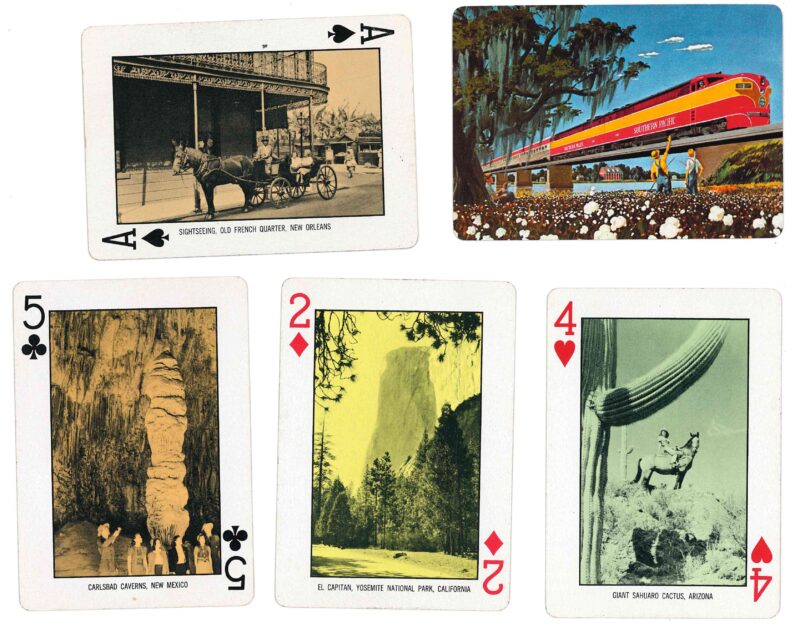
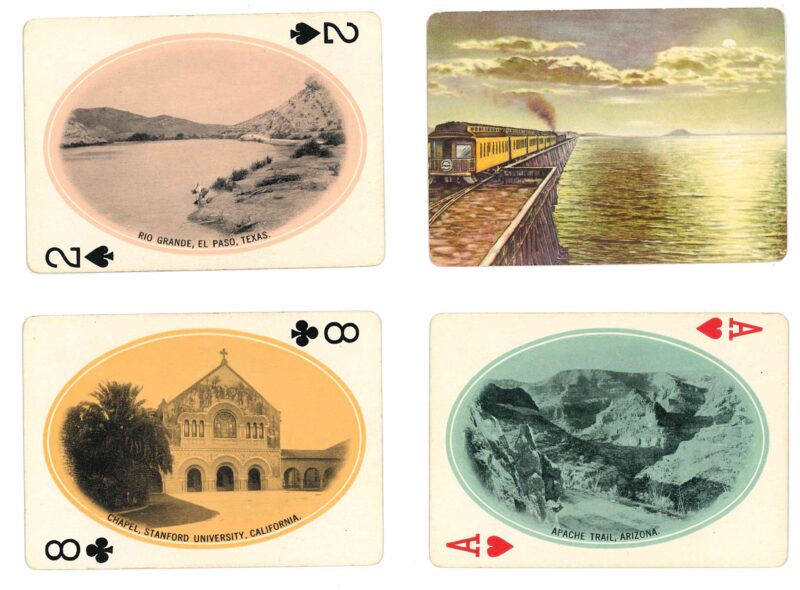
A handful, particularly some of the Southern Pacific cards, are also part of a small collection which showcase a different pictorial view on each card. Not all are produced by railroads, but the scenic cards in this group include views of “Picturesque Canada”, the Florida coast, the Great Southwest, the Golden West, the White Pass and Yukon, Niagara Falls, and scenes along the Denver and Rio Grande Western, Western Pacific, Intercolonial & Prince Edward Island, and Chicago, Milwaukee, St. Paul & Pacific railway lines.
The last third or so of the collection somewhat defies categorization. There are a number of standout decks from a wide variety of topics, publishers, and locations. Some of the more unusual decks and highlights include:
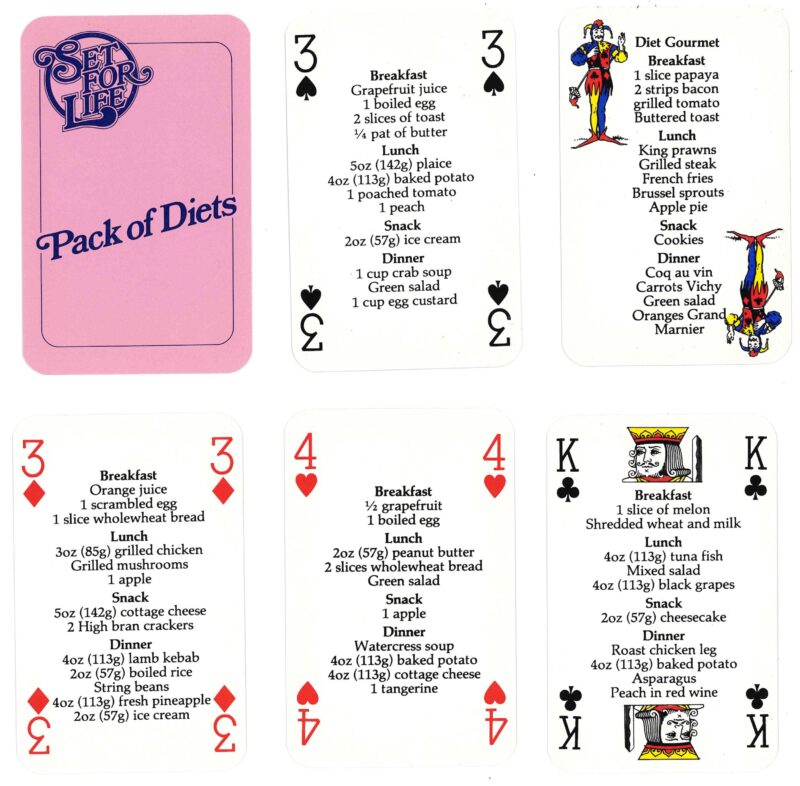
  • UK Registered Dieticians “Pack of Diets” deck featuring four different diet plans, one per suit, which a different full day’s menu per card
  • “Play House” children’s game with cards featuring rooms and household objects, not traditional suits and numbers
  • Double decks from Fournier of Spain, including “Medieval World”, “Traditional Russian”, and “Baraja Histórica”, regarding the Spanish ‘discovery’ and colonization of America
  • A deck with sites from the Former Imperial Palace of China
  • Famous Views of Hong Kong
  • A deck featuring World War I posters from the Imperial War Museum
  • Milton Bradley “Par Auction” deck
  • A collection of French historical and novelty decks featuring Napoleon, wines of France, French kings, Joan of Arc, and other historical figures
  • Two Braniff International decks with Spanish and Portuguese phrases
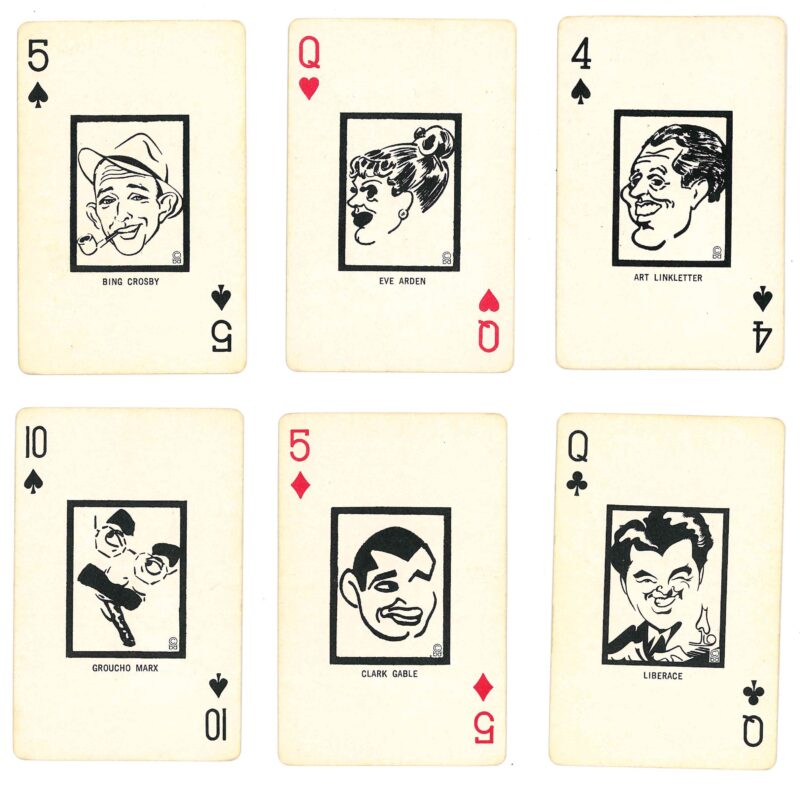
  • City of Hope Medical Center double deck featuring Hollywood caricatures
  • TWA Collector’s series featuring a different aircraft on each card
  • A Braille deck
  • Coca-Cola deck, circa 1970, featuring a print by Michael English
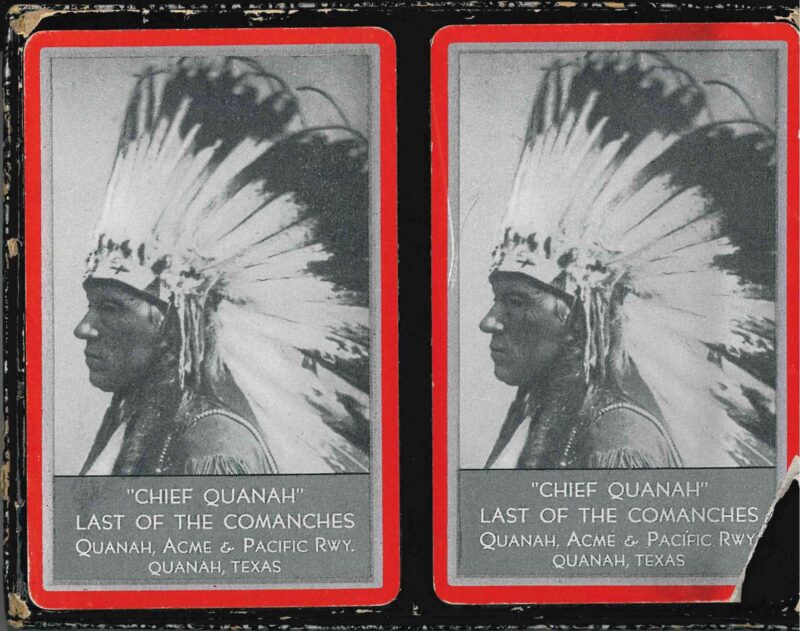
  • Two railroad double-decks featuring Native American figures, including one with a portrait of Chief Quanah, Last of the Comanches from the Quanah, Acme & Pacific Railway
  • Two “Extra Fine Rococo Style” Art Deco decks from the USSR, 1917
  • Vintage English Ovals Cigarettes Playing Cards, some decks still sealed
  • A number of Waddington’s “Beautiful Britain” scenic decks
  • Large double art decks from Piatnik, including “Baroque”, “Renaissance”, “Original Viennese”, and “Rococo”
  • A round-format deck from Honeywell Thermostats
  • “Gypsy Witch” fortune-telling deck
  • Edison Lamp Works/General Electric deck featuring artwork by Maxfield Parrish
  • Friends of the Tate Gallery art deck
  • Circa 1890s deck from the Cunard Steamship Company
  • Circa 1850s deck from the African Steamship Company
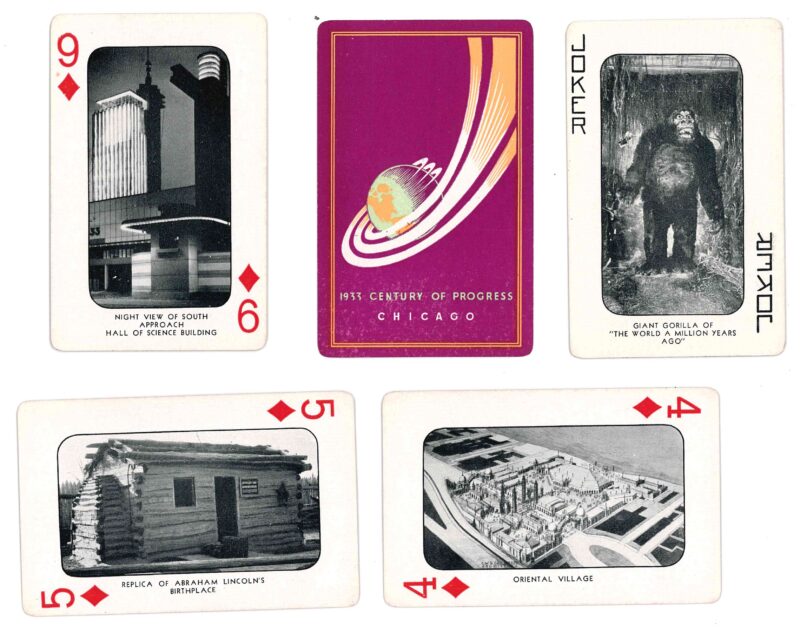
  • 1933 Century of Progress World’s Fair souvenir deck with views of the fair
  • Brother Electronic Office Typewriters deck from the 1984 Los Angeles Olympics
  • Sealed 1929 Wanamaker “Bubble” double deck
  • A deck from the Lahaina-Kaanapal & Pacific Railroad in Hawaii
  • A deck with backs featuring a photographic portrait of “Esiuol – An Eskimo Glamour Girl in Native Costume”
  • Two Russian decks with Cyrillic letters
  • 2004 John Kerry for President deck, each card featuring a caricature of a different politician or figure
  • “Newmarket” game deck, circa 1930s, featuring racehorses
  • 1901 Pan-American Exposition souvenir deck with views of the fair
  • “Old English Curve Cut Pipe Tobacco” deck in original box
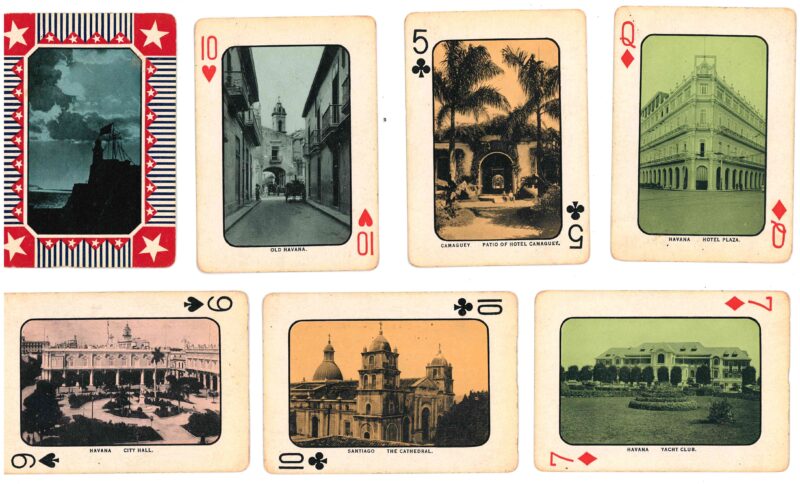
  • Scenic deck with views from Cuba
  • Cotton Belt Route deck with a color illustration of a young Black girl eating watermelon
An incomparable historical and cultural resource and a fascinating collection of incredible scope. Collection of over 700 decks of playing cards, primarily American but also with examples from Europe and elsewhere in the world, published from the mid-19th through the early 21st century, most in original boxes and cases, many still sealed in original wrapping, some double decks in larger folding boxes. Varying condition – many excellent, a number of cases with expected wear and tear to cardboard, a handful of decks incomplete. Various places, circa 1845-2015. Price available upon inquiry
{ 0 comments }
Games and toys have been created for children to play with for as long as humans have been in existence, and children’s books date back to some of the earliest experiments in printing. The first picture book exclusively meant for children is generally accepted to be Orbis Sensualium Pictus [The Visible World in Pictures], published in 1658 by Johann Amos Comenius. In it, Comenius combined text with illustrations to help teach children about the world.

This collection of items from Bernett Rare Books offers something for everyone. We present books, educational materials, and games aimed at children, as well as a trade catalog of toy manufacture, dating from as early as 1814, up through the 1960s, and from locations across Europe and Asia.

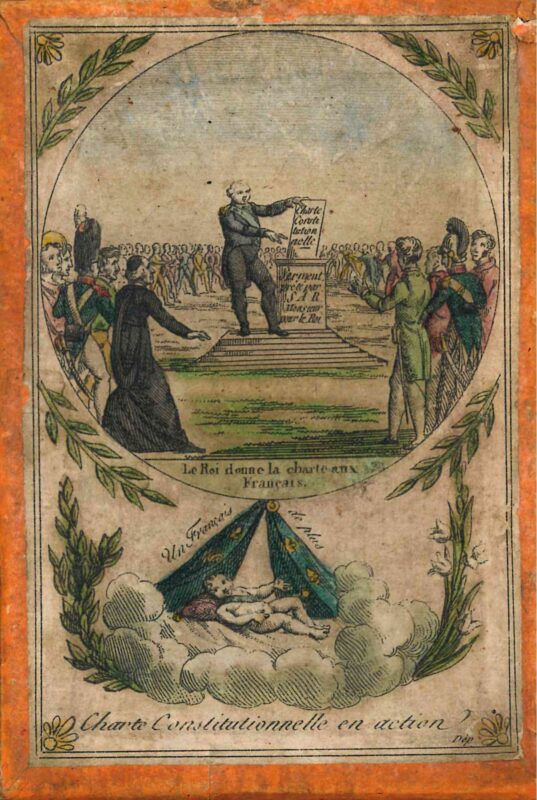
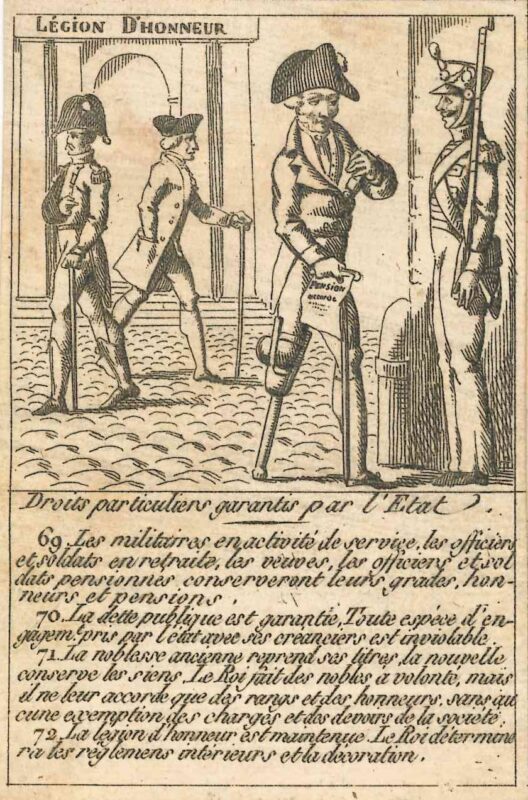
The earliest item in this grouping is a rare set of French historical cards, dedicated to teaching about the Constitutional Charter. The set of 24 cards date from 1814, each with an engraved illustration above several lines of text detailing 2 to 4 of the articles from the Charter, with all 76 articles contained across the 24 cards. This type of series was distributed by the “Marchands de Nouveautés”, a generic name given to a group of print dealers in Paris who usually printed more popular stories such as Robinson Crusoe or Don Quixote. A set of cards such as this one was intended to help eliminate Napoleonic fervor and unite France under a renewed sympathy for and belief in the monarchy. A very scarce set in its original cardboard box with engraved and hand-colored vignette to lid.
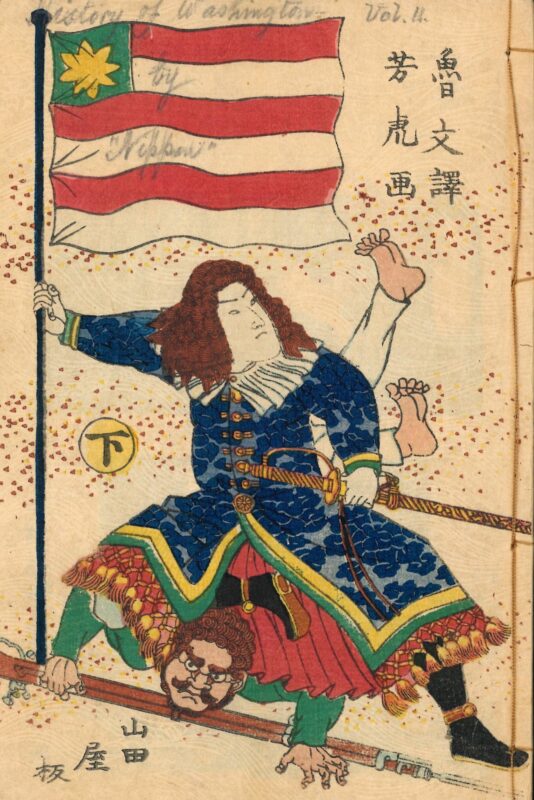


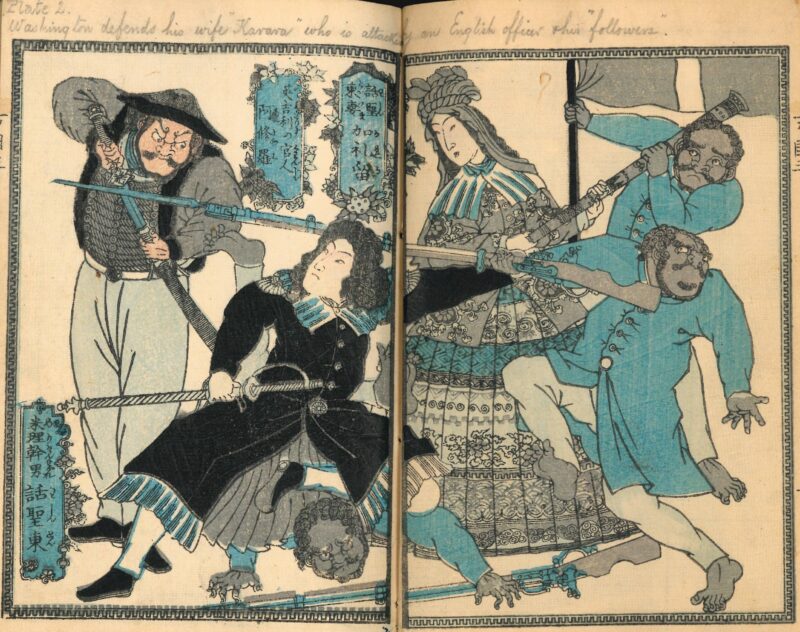
The second item is a whimsical and bizarre illustrated alternative American history from Japan called Osanaetoki Bankokubanashi. Dating to 1861, this unusual and rare set of four booklets translate loosely as “The History of Washington”. Written by Kanagaki Robun and illustrated by Utagawa Yoshitora, this fascinating series describes and depicts scenes where Christopher Columbus discovers America and defeats mutineers, but then shows George Washington, John Adams, and Benjamin Franklin as superhero-like figures who punch tigers, defeat dragons, and kill giant snakes who eat people. This set was issued shortly after Commodore Perry’s arrival in Japan, when interest in America was high but direct experience with America was still virtually non-existent – and so Japanese writers could imagine up fantastical tales and visions of grotesque monsters, evil villains, and peaceful goddesses existing in that exotic land.


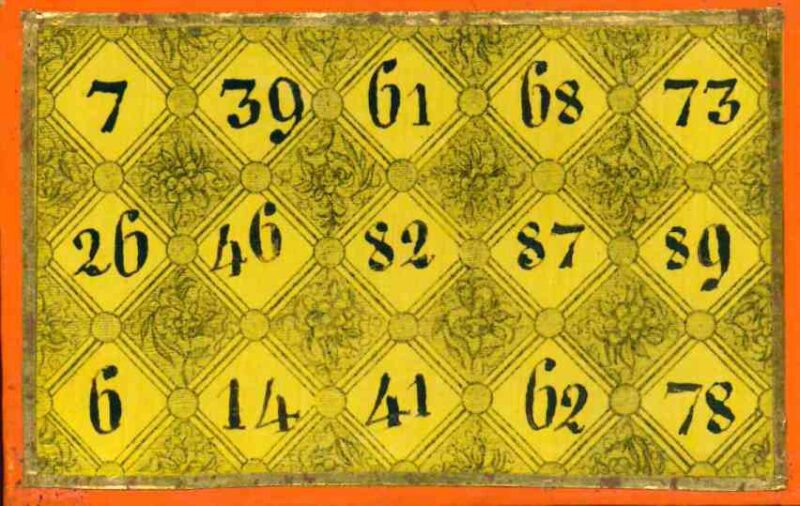
The third object which also dates most likely to the 19th century is an antique ‘tombola’ game from Italy. ‘Tombola’ is a traditional Italian game very similar to bingo, first played in Naples in the 18th century. This set is comprised of a cardboard game board with 90 gold-numbered spaces on red paper in an embossed gold paper frame, 90 hand-numbered wooden game tokens, and 87 total individual cards in 15 sets, the cards also hand-numbered. Traditionally, players would cover the numbers on their individual cards using beans, lentils, or pieces of citrus peel as markers.
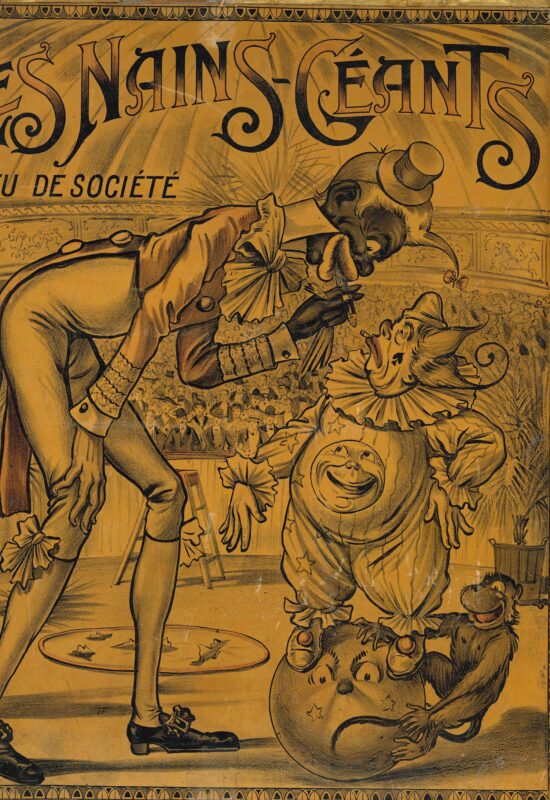


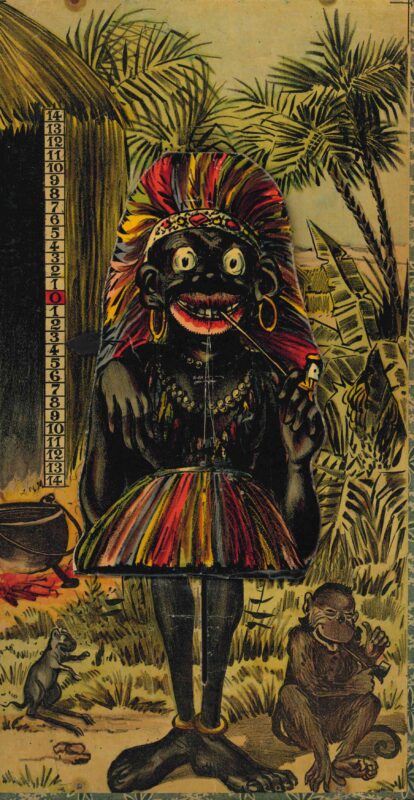
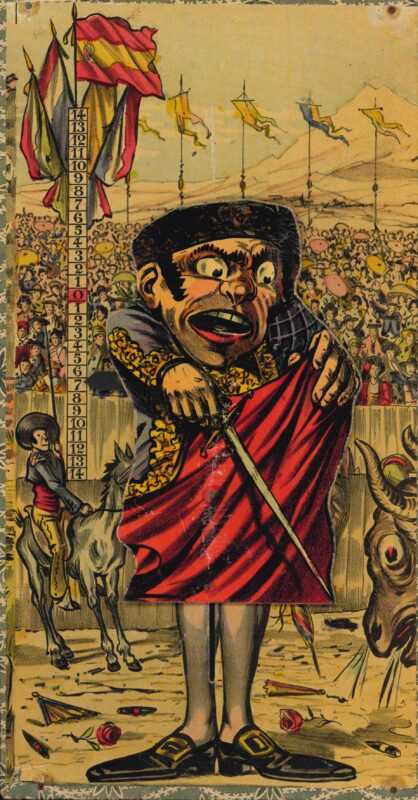
Our fourth object is a larger-format board game dating to right around the turn-of-the-century. Titled ‘Les Nains-Géants’, or ‘The Dwarf Giants’, this humorous game has players keep track of their points using a large chromolithographed caricature-style figure which slide up and down along a scoring track, making the figures ‘grow’ and ‘shrink’. Whoever reaches the top of their tracker first wins the game. The characters in the game include a jockey, a postman, a matador, a farmer, a soldier, and a “tribal” style Black man in front of a hut. The box lid also includes a racial stereotype in its cover illustration depiction of a Black man and a circus clown. The game was published by Saussine, a well-known Parisian game manufacturer, and was designed by Eugene Serre, one of Saussine’s greatest illustrators.
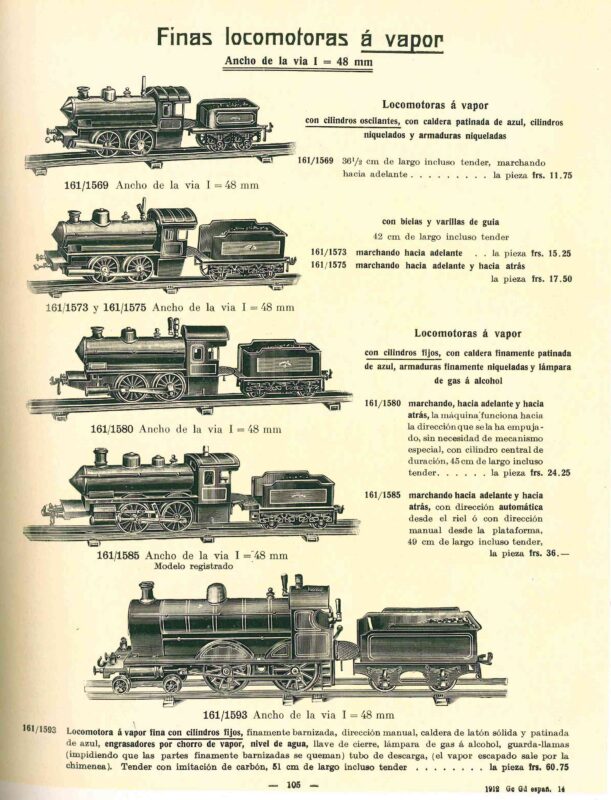


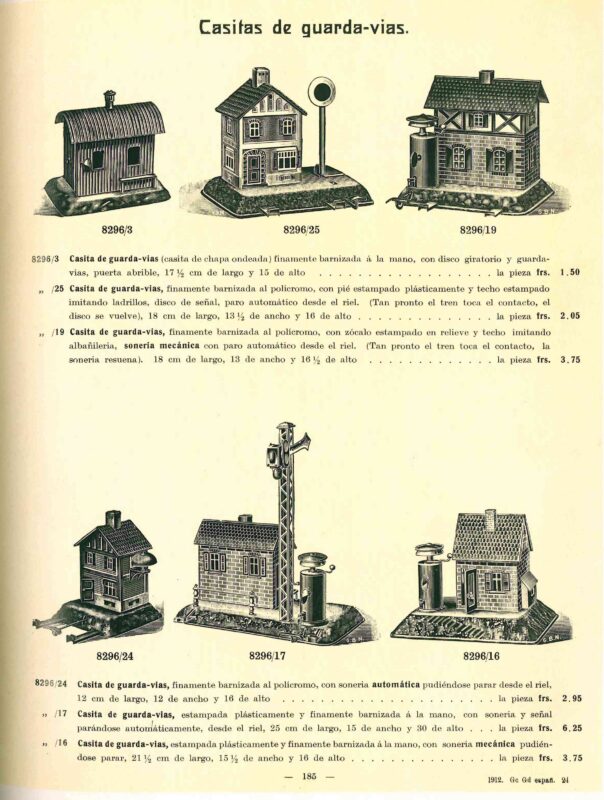
Moving into the 20th century, we have this scarce trade catalog of German toys for the Spanish market. The catalog was printed in Nuremberg in 1912 for Gebrüder Bing, a German toy company founded in 1863 which started their business producing metal tableware and utensils before moving to toy production. They ended up becoming best-known for their toy trains and live steam engines. This particular catalog covers a wide range of their offerings and provides detailed descriptions, measurements, and prices of toys such as steam engines, steam trains, ships, automobiles, train tracks, train set accessories, magic lanterns, and steroscopes.
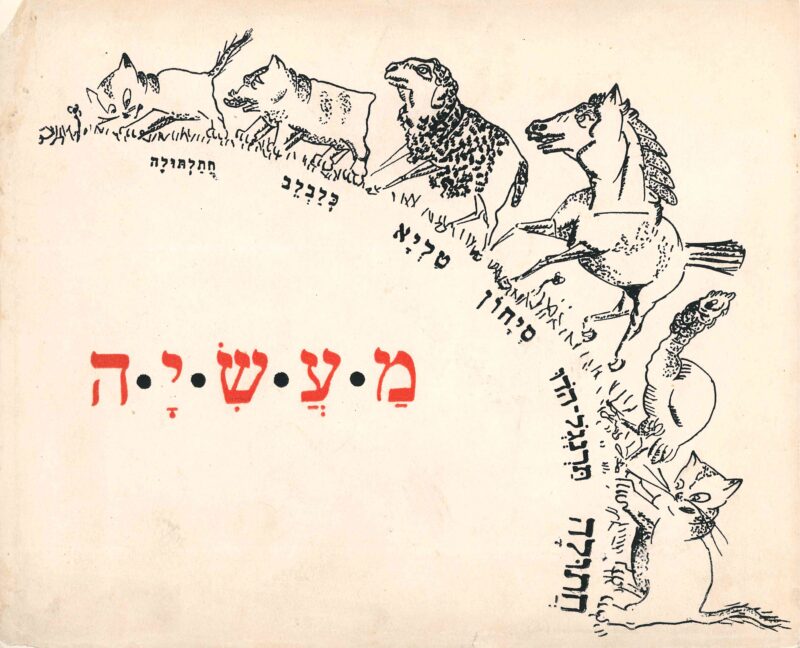
 

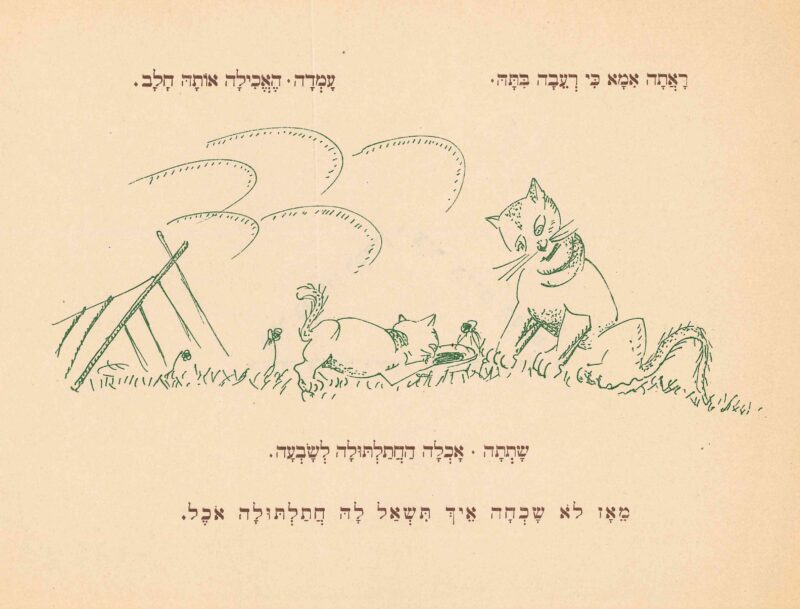
Next up are a few various items dating to the 1920s. The first of these is a rare Hebrew-language children’s book published in Warsaw around 1922. The book was written by Bentsiyon Raskin (also known as Ben Zion Raskin), one of the leaders of the Zionist movement in Warsaw, and illustrated by Chaim Hanft, a member of the Warsaw School of Fine Arts. The book tells the story of a kitten who played with other animals until she grew hungry, and realized she had forgotten how to ask for food. It was published as part of Raskin’s “Zil Zlil” series of five children’s books.
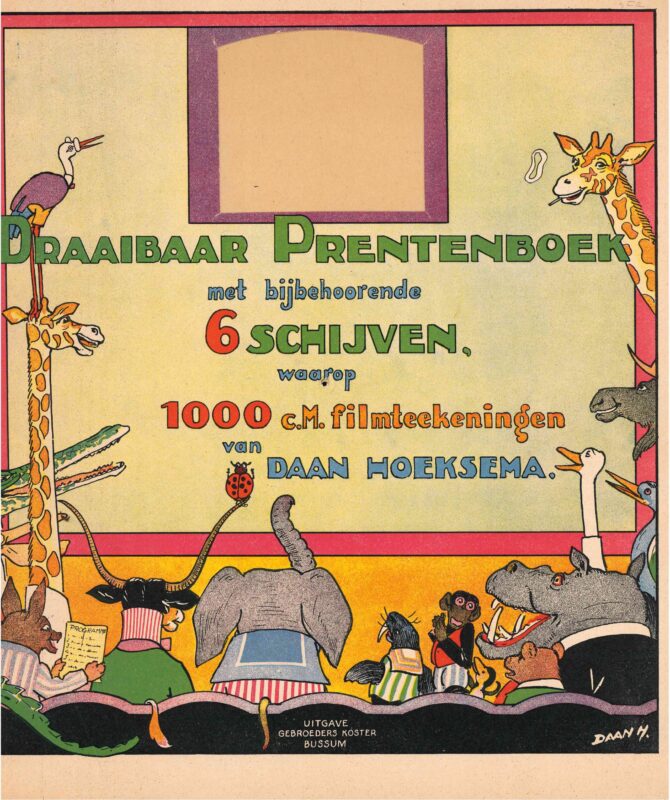
 

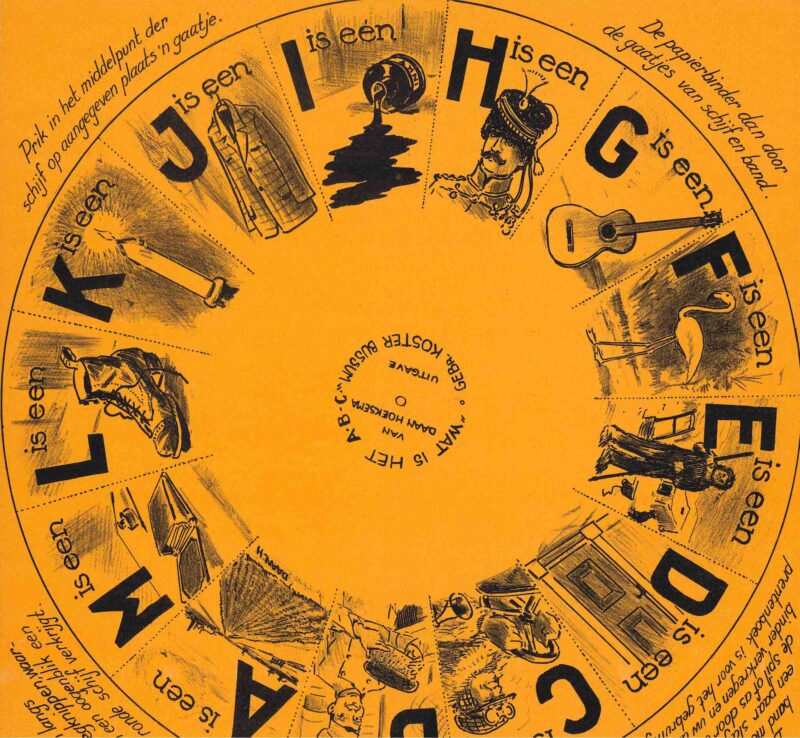
The next object is a Dutch moveable children’s picture book, a sort of precursor to early animation, dating to 1924. It was designed by Daan Hoeksema, a noted Dutch children’s book illustrator and graphic designer who wrote what is considered by many to be the first locally-produced Dutch comic book with an ongoing storyline and recurring main character. This rare ‘book’, titled ‘Draaibaar Prentenboek met bijbehoorende 6 schijven, wwarop 100 c.m. filmteekeningen’, consists of six sheets of cardstock with illustrations drawn around a circle. The sheets contain instructions for cutting out the discs and securing them through the center with a brad, allowing the viewer to rotate the disc and see a sequential story or series of images, a sort of moving comic book. The discs contain images and stories including an alphabet, the adventures of two traditional Dutch villagers, racist stereotypes of Black people in Africa, moral tales, and silhouettes of circus performers, among others.


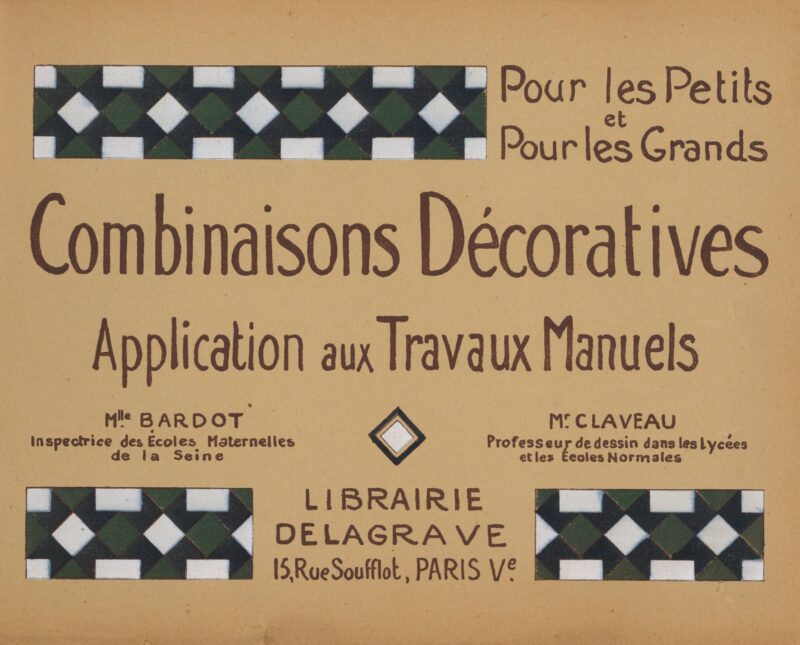
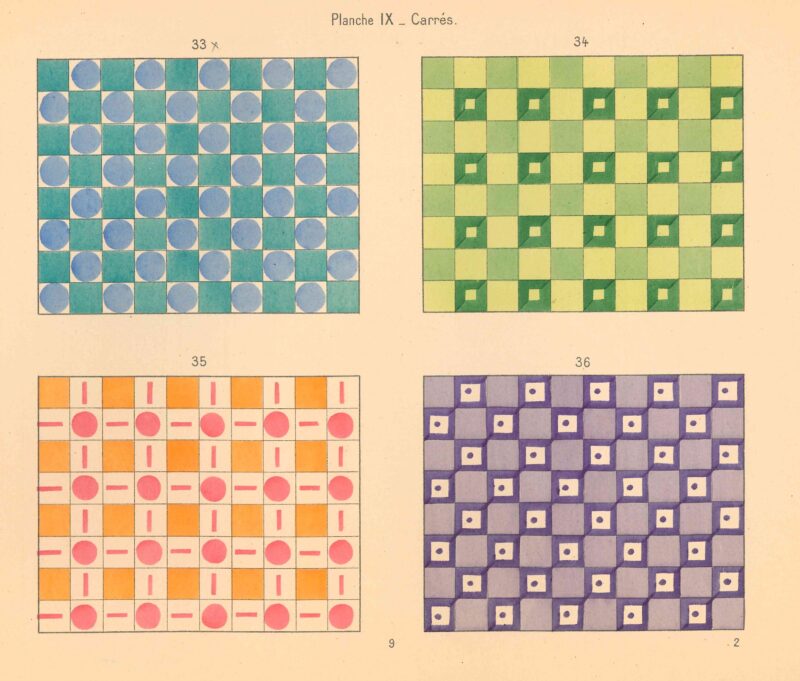
The last item dating to the 1920s is a French early childhood art education manual with 16 original brightly colored pochoir plates. Combinaison Décoratives: Application aux Travaux Manuels, Pour les Petits et Pour les Grands was published in Paris in 1929 as a method for teaching color composition to children. The plates show numerous decorative patterns which were executed by young schoolchildren between the ages of 4 and 8. One of the authors, Madeleine Bardot, served as Inspectrice des Écoles Maternelles de la Seine and was an advocate of “l’education nouvelle”, a movement which, in their words, “prepared children not only to become future citizens capable of fulfilling their duties towards their loved ones and humanity as a whole, but also human beings conscious of their human dignity.” The other author, M. Claveau, was a professor of drawing at the lycées and écoles normales. Together the two selected 64 pieces from the best examples of student work. Many of the outlines were prepared by teachers and filled in by students, but the last few plates were created entirely by children from start to finish. A beautiful work of early childhood education and also color theory.
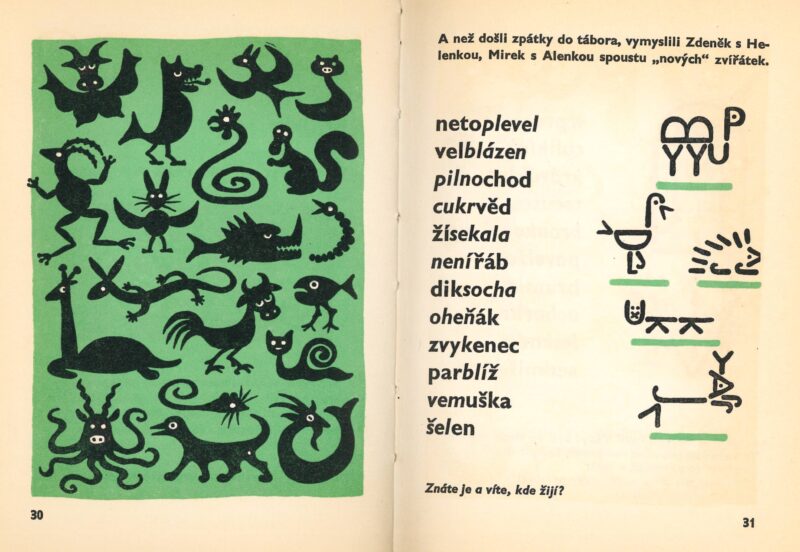


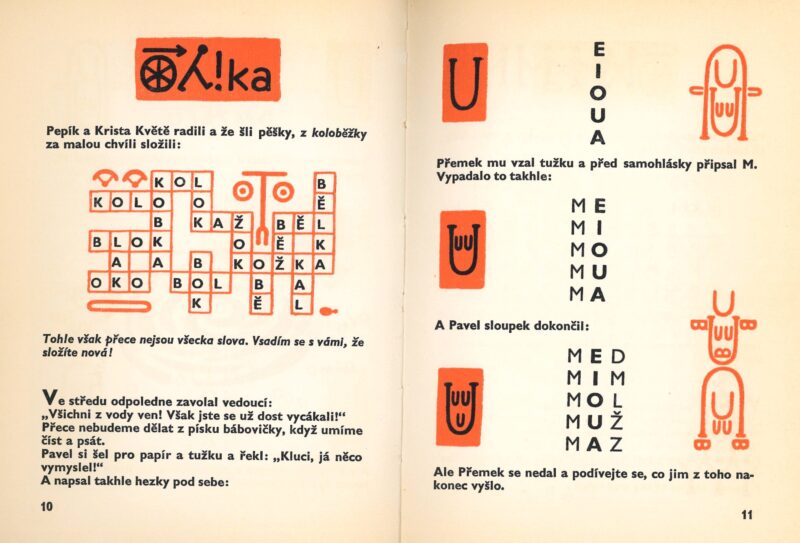
The final item in this collection is a quirky work of Czech concrete poetry designed as a whimsical children’s book. Co se slovy všechno poví was published in 1964 and contains poems by Josef Hirsal and Bohumila Grögerová, foremost representatives of concrete and experimental poetry in mid-century Czechoslovakia. With illustrations by Věra and Pavel Brázda, the book is a playful exploration of word-based games that children play on a train ride, full of visual poems, full-page colorful illustrations, and two-color letterpress designs set by Josef Dolezal.


We welcome inquiries on any of the above items, and wish you all a very happy and healthy holiday season!

{ 1 comment }

The Crimean War broke out on October 16, 1853 and lasted until early 1856, and was fought initially over the rights of Christian minorities in the Holy Land, which was under the domain of the Ottoman Empire. On one side was the Ottoman Empire allied with Britain, Sardinia, and France, who favored the rights of Roman Catholics. On the other (losing) side was Russia, which favored the Eastern Orthodox Church. While the churches worked out their differences and came to a mutually satisfying agreement, Nicholas I of Russia and Emperor Napoleon III of France both refused to budge. Nicholas issued an ultimatum that the Orthodox subjects of the Empire be placed under his protection. Britain attempted to mediate and managed to arrange a compromise that Nicholas agreed to. However, when the Empire demanded additional changes, Nicholas refused and prepared for war. With the support of France and Britain, the Ottomans declared war on Russia in October 1853.

The war began in the Balkans but battles were carried out at the Black Sea, the Baltic Sea, the Caucasus, the White Sea, and in the North Pacific. Eventually neutral countries began to join the alliance. Isolated and facing invasion from the west if the war went on, Russia sued for peace in March 1856. The war ended with the Treaty of Paris, signed on March 30. As a result, the Black Sea became neutral territory with warships and fortifications completely prohibited, which was a major setback to Russian influence in the region. The Ottoman vassal states of Wallachia and Moldavia became largely independent with Christians granted official equality, and the Orthodox Church regained control of the Christian churches in dispute.

The Battle of Kil-Bouroun (Kinburn) was one of many battles fought during the three years of the Crimean War.  Staged at the tip of the peninsula of Kinburn on the south bank of the Dnieper River near the Crimea, it was the site of an attack by the French and British navies on the Russian outpost there during the final phase of the war. On October 17, 1855, France and Britain attacked the outpost with a fleet of ironclad ships, destroying the fortifications within mere hours and suffering almost no damage. This decisive battle helped to signify the decline of the traditional wooden warship.

F.A. Bernett Books currently has in its inventory a scarce and fascinating portfolio of lithographs commemorating this wintry naval battle, with large and detailed depictions of the ships and the ruined fortifications.

Paris, (François-Edmond). Nos Souvenirs de Kil-Bouroun Pendant l’Hiver Passé Dans le Liman du Dnieper, 1855-1856. A beautiful and rare album comprising title page, a map showing the location of the naval battle of Kil-Bouroun (Kinburn), and 15 chromolithographic plates depicting mostly maritime scenes after the battle along the ice-bound Dnieper River, including inside the fort, disembarking onto the ice, and ruined fortifications, lithographed and colored by Eugene Ciceri and Adolphe Bayot, the ships drawn by Antoine Léon Morel-Fatio, after drawings by Paris. Some details appear to be hand-colored. Some scattered foxing, small stain to inside front cover, a few small tears along binding, spine very slightly shaken. Folio. Full leather, raised spine. Paris (Arthus-Bertrand/Becquet Freres) n.d. (circa 1856). Very scarce; as of October 2017, WorldCat locates only two holdings in North America of this suite. 48752

{ 0 comments }

Historical and Documentary Photography in 19th and Early 20th Century America

May 31, 2017

The late 19th and early 20th centuries were periods of major change and important historical events throughout the United States, as well as key developments in photography technology. Life could be documented in a way that was never possible before, both physically and economically. Photography allowed for more precise archiving than either lithography or engraving. […]

Charlie Hebdo’s Ancestors

January 23, 2015

  Journalism in France has a rich tradition of political satire and caricature, dating back many hundreds of years and gaining footholds at many crucial moments in France’s history. Popular in the 17th century, Molière and Jean de la Fontaine earned their fame mocking the upper echelons of society through comic plays or fables, often […]

Conjuring Pan: Julius Meier-Graefe’s darkly beautiful paean to the new currents of art in Europe, 1895-1899.

Pan. Cover detail. March 22, 2012

Pan.  Years I-V (all published). Edited by Julius Meier-Graefe and Otto Julius Bierbaum.  A complete run of all five years, bound in 21 parts as issued  (altogether 347, 351, 266, 267, 279 pp.)  Sm. folio.  Orig. wrpps., a few chips and tears at edges, some covers professionally repaired.  Berlin (Genossenschaft Pan) 1895-1899.  (45601) In the […]

Felix Vallotton’s Reinvention of the Woodcut

Thumbnail image for Felix Vallotton’s Reinvention of the Woodcut February 1, 2011

Meier-Graefe, Julius. Felix Vallotton, Biographie: Des Kuenstlers nebst dem Wichtigsten teil seines Bisher Publicierten Werkes & Einer Anzahl Unedierter Originalplatten; De Cet Artiste avec la Partie la Plus Importante de son Oeuvre Editee et Differentes Gravures Originales & Nouvelles. Berlin/Paris (J. A. Stargardt/Edmond Sagot) n.d. (ca. 1898).  Freitag 12821. [41835] Painter, playwright, critic and man […]

“In Consequence of the Demolition of Haggerston Castle…”

Thumbnail image for “In Consequence of the Demolition of Haggerston Castle…” December 18, 2009

I. In Consequence of the Demolition of Haggerston Castle, Beal, Northumberland:  Illustrated Catalogue of the Most Expensive and Best Period Style Fixtures and Fittings, Metal, Materials and Fabric; Also Garden Ornaments, Balustrading, Paving, Sculptured Stone Figures, Fine Wrought Iron Gates, Etc. Etc.  II. Haggerston Castle, Beal, Northumberland: Catalogue of Four Days Sale.  III.  llustrated Particulars […]

George Barbier & the Great War

Thumbnail image for George Barbier & the Great War December 1, 2009

Barbier, George, & Jules Meynial.  La Guirlande des Mois.   Anées 1-5 (1917-1921) (all published).  Paris (Meynial) 1917-1921. [45546] Renowned illustrator, costume designer and Art Deco stylist George Barbier was 32 in 1914 when war broke out in Europe.  Although little is known about his personal biography, it stands to reason that he would have been […]

A 19th-Century Crayon and Watercolor Instruction Book

Thumbnail image for A 19th-Century Crayon and Watercolor Instruction Book October 15, 2009

Couleru.  Nouveau Cours Élémentaire de Coloris et d’Aquarelle: Suivi de Considérations sur la Peinture Orientale. Paris (Monrocq Freres) n.d. (circa 1860).  [45699] These charming images come from Nouveau Cours Élémentaire de Coloris et d’Aquarelle, an illustrated course of instruction in watercolor and crayon techniques for children and young adults. After an eight-page introduction offering 12 […]