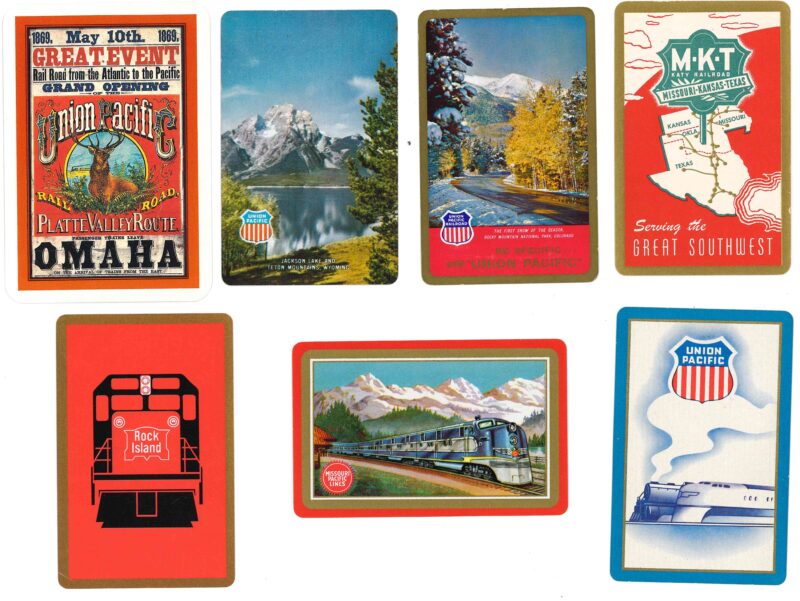
 This phenomenal and expansive collection of playing cards serves as an unusual and invaluable resource by which we can trace the history of transportation and the railroad industry, trends in travel and advertising, technological developments, cultural history, and even politics. While playing cards date back to antiquity, card games saw a surge in popularity in Europe during the 17th and 18th centuries. By the early 19th century, games such as poker were played on gambling riverboats on the Mississippi River. Playing cards occupy a unique place in history in that they are able to function as decorative objects, while also being objects of daily use and recreation. Their portable size made them well-suited to travel. Railroads and airlines produced decks of playing cards as complimentary items of entertainment for their passengers to use while aboard and to take with them as souvenirs of their trips.
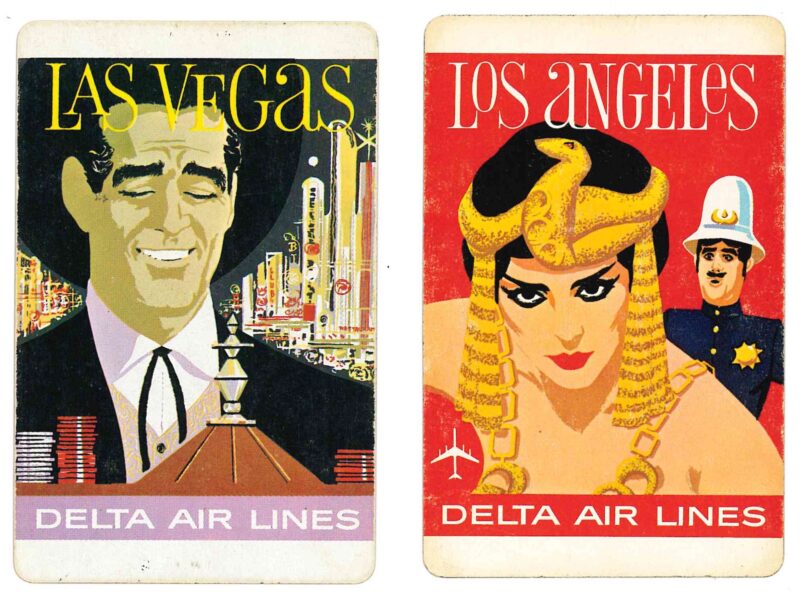
Of the 700 or so decks in the collection, over a third are related to the railroad industry. Over fifty individual railroad lines are represented, both major and minor lines from across North America, including Northern Pacific, Southern Pacific, Union Pacific, Algoma Central, Atlantic Coast Line, Bangor/Aroostook, Burlington Northern, Burlington Vista Dome Zephyr, Southern Railway, Denver and Rio Grande Western, Illinois Central, Chesapeake and Ohio, Canadian Pacific, Kansas City Southern, L&N (Louisville & Nashville), Missouri Pacific, Ontario Northland, Norfolk and Western, Norfolk and Southern, Nickel Rate Road, Pennsylvania Railroad, B&O, Wabash, Soo Line, Santa Fe, Seaboard Coast Line, and others. Many of the decks have pictorial backs showcasing a landscape scene along the train line.
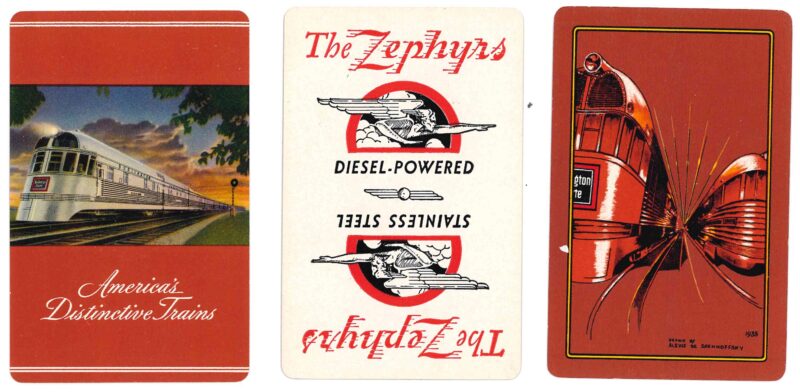
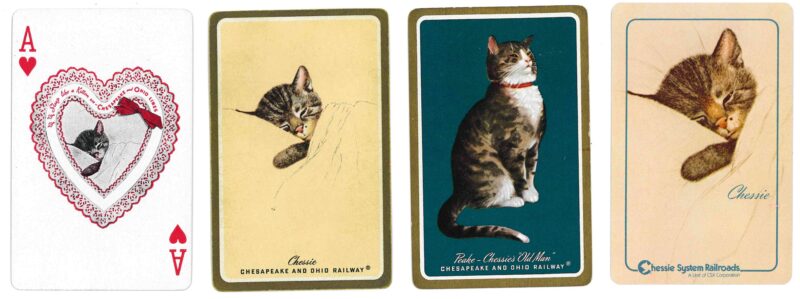
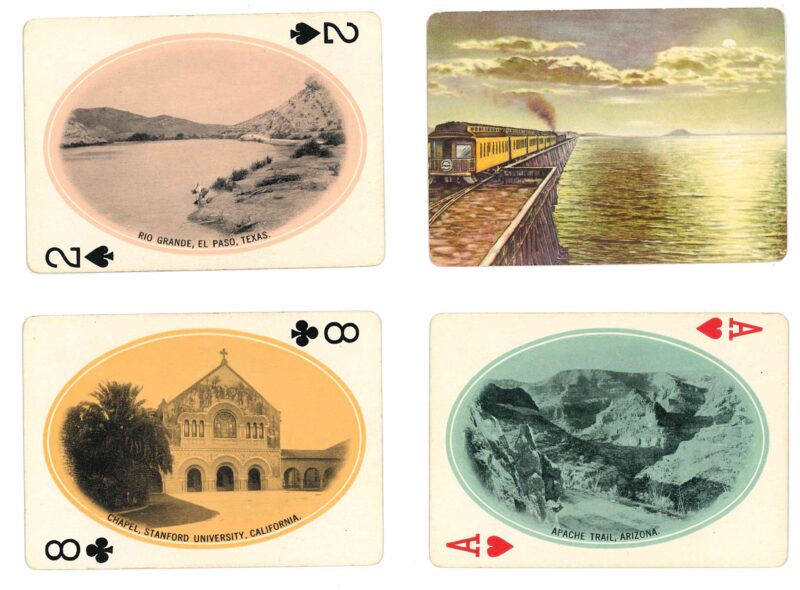
A handful, particularly some of the Southern Pacific cards, are also part of a small collection which showcase a different pictorial view on each card. Not all are produced by railroads, but the scenic cards in this group include views of “Picturesque Canada”, the Florida coast, the Great Southwest, the Golden West, the White Pass and Yukon, Niagara Falls, and scenes along the Denver and Rio Grande Western, Western Pacific, Intercolonial & Prince Edward Island, and Chicago, Milwaukee, St. Paul & Pacific railway lines.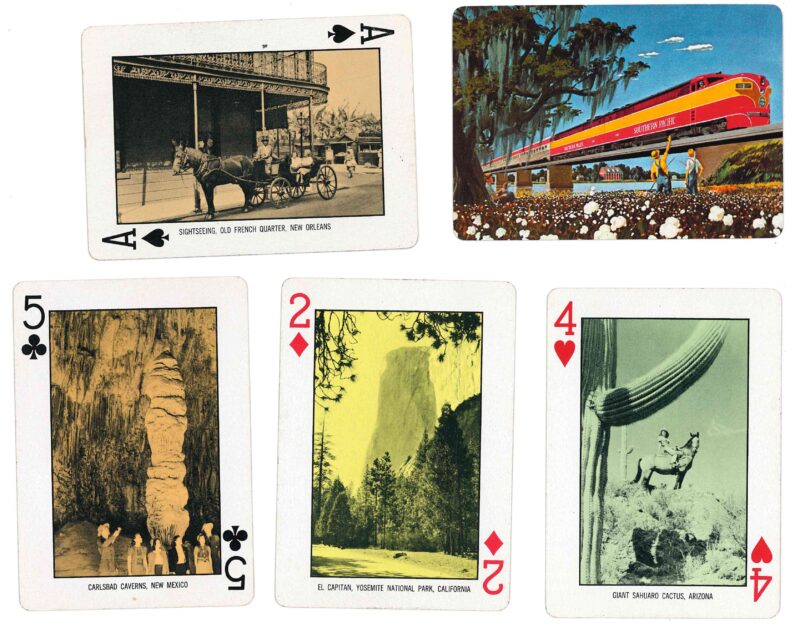
The last third or so of the collection somewhat defies categorization. There are a number of standout decks from a wide variety of topics, publishers, and locations. Some of the more unusual decks and highlights include:
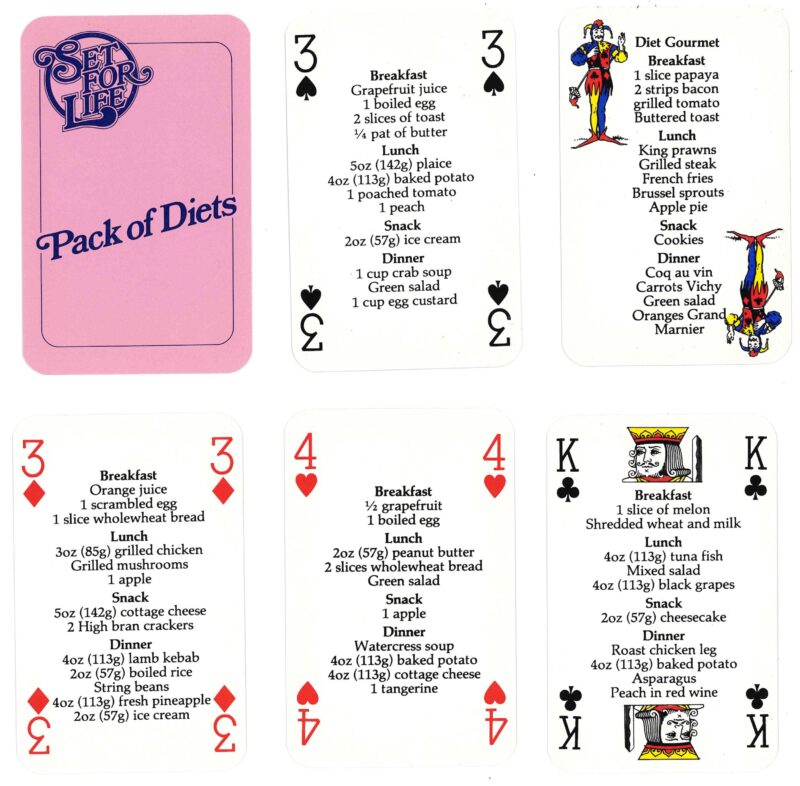 UK Registered Dieticians “Pack of Diets” deck featuring four different diet plans, one per suit, which a different full day’s menu per card
- “Play House” children’s game with cards featuring rooms and household objects, not traditional suits and numbers
- Double decks from Fournier of Spain, including “Medieval World”, “Traditional Russian”, and “Baraja Histórica”, regarding the Spanish ‘discovery’ and colonization of America
- A deck with sites from the Former Imperial Palace of China
- Famous Views of Hong Kong
- A deck featuring World War I posters from the Imperial War Museum
- Milton Bradley “Par Auction” deck
- A collection of French historical and novelty decks featuring Napoleon, wines of France, French kings, Joan of Arc, and other historical figures
- Two Braniff International decks with Spanish and Portuguese phrases
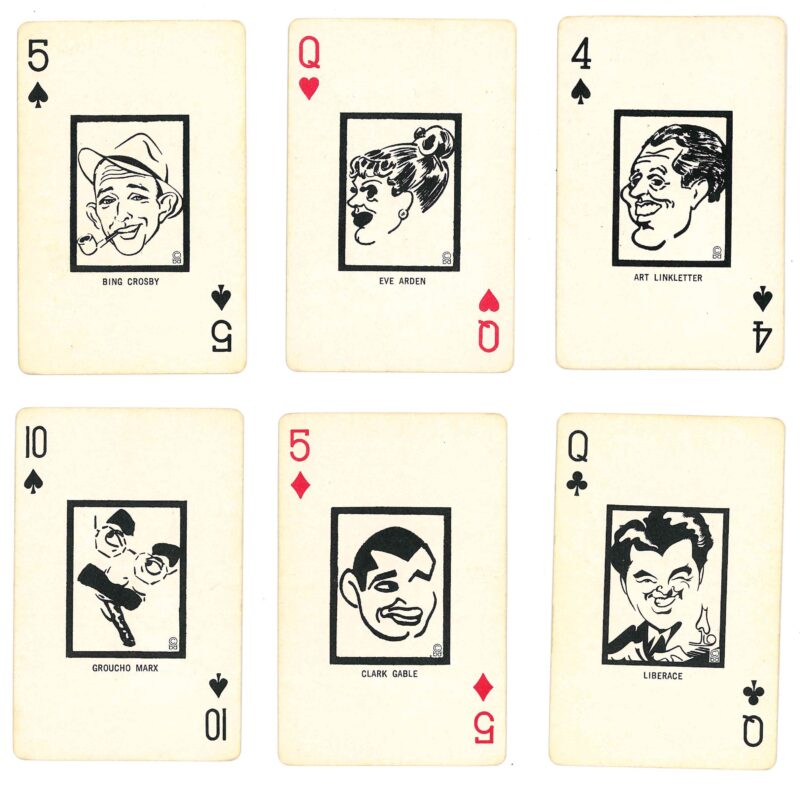
- City of Hope Medical Center double deck featuring Hollywood caricatures
- TWA Collector’s series featuring a different aircraft on each card
- A Braille deck
- Coca-Cola deck, circa 1970, featuring a print by Michael English
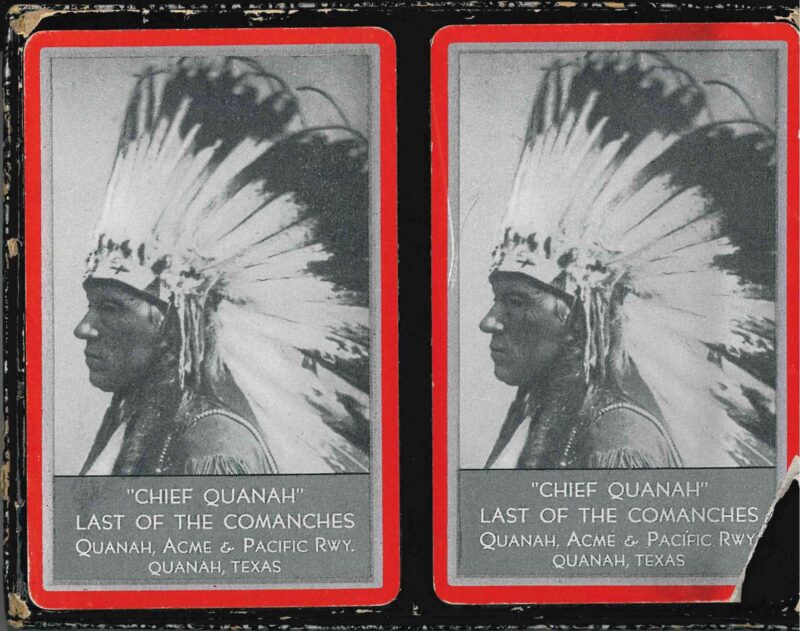 Two railroad double-decks featuring Native American figures, including one with a portrait of Chief Quanah, Last of the Comanches from the Quanah, Acme & Pacific Railway
- Two “Extra Fine Rococo Style” Art Deco decks from the USSR, 1917
- Vintage English Ovals Cigarettes Playing Cards, some decks still sealed
- A number of Waddington’s “Beautiful Britain” scenic decks
- Large double art decks from Piatnik, including “Baroque”, “Renaissance”, “Original Viennese”, and “Rococo”
- A round-format deck from Honeywell Thermostats
- “Gypsy Witch” fortune-telling deck
- Edison Lamp Works/General Electric deck featuring artwork by Maxfield Parrish
- Friends of the Tate Gallery art deck
- Circa 1890s deck from the Cunard Steamship Company
- Circa 1850s deck from the African Steamship Company
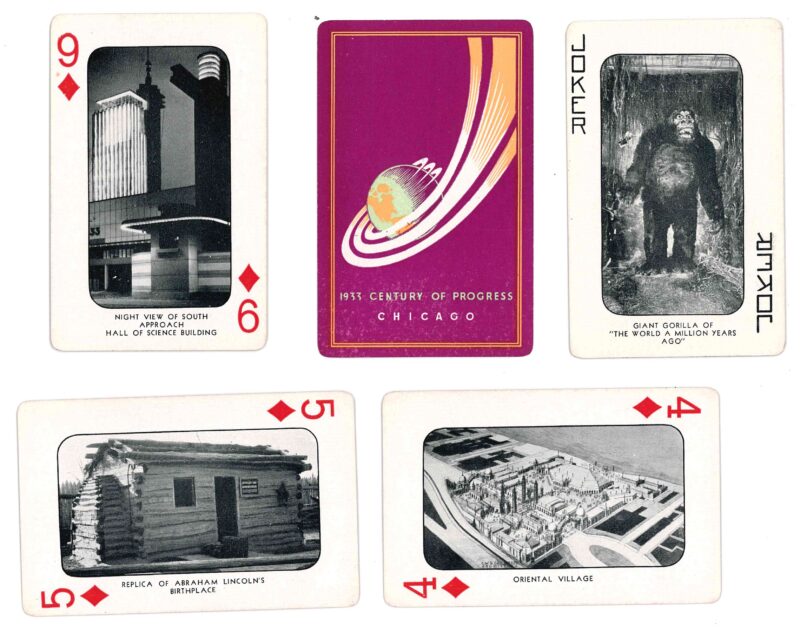 1933 Century of Progress World’s Fair souvenir deck with views of the fair
- Brother Electronic Office Typewriters deck from the 1984 Los Angeles Olympics
- Sealed 1929 Wanamaker “Bubble” double deck
- A deck from the Lahaina-Kaanapal & Pacific Railroad in Hawaii
- A deck with backs featuring a photographic portrait of “Esiuol – An Eskimo Glamour Girl in Native Costume”
- Two Russian decks with Cyrillic letters
- 2004 John Kerry for President deck, each card featuring a caricature of a different politician or figure
- “Newmarket” game deck, circa 1930s, featuring racehorses
- 1901 Pan-American Exposition souvenir deck with views of the fair
- “Old English Curve Cut Pipe Tobacco” deck in original box
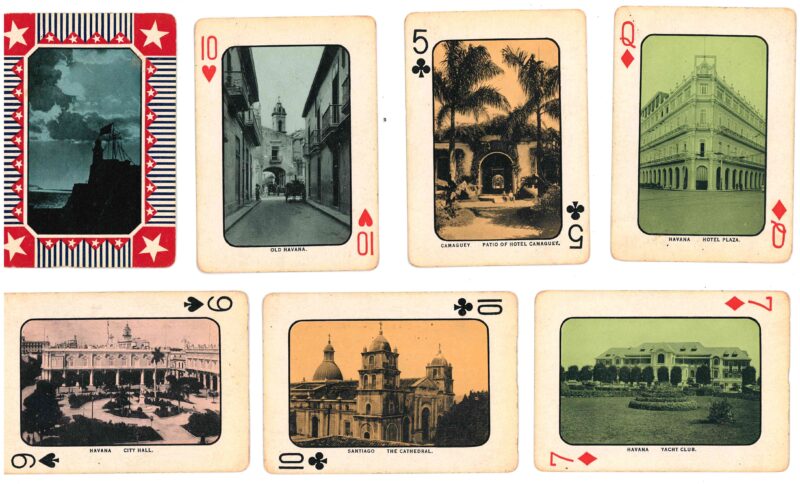
- Scenic deck with views from Cuba
- Cotton Belt Route deck with a color illustration of a young Black girl eating watermelon
 An incomparable historical and cultural resource and a fascinating collection of incredible scope. Collection of over 700 decks of playing cards, primarily American but also with examples from Europe and elsewhere in the world, published from the mid-19th through the early 21st century, most in original boxes and cases, many still sealed in original wrapping, some double decks in larger folding boxes. Varying condition – many excellent, a number of cases with expected wear and tear to cardboard, a handful of decks incomplete. Various places, circa 1845-2015. Price available upon inquiry
{ 0 comments }


